
Re-Entry Practice Should Be Part of Every River Trip
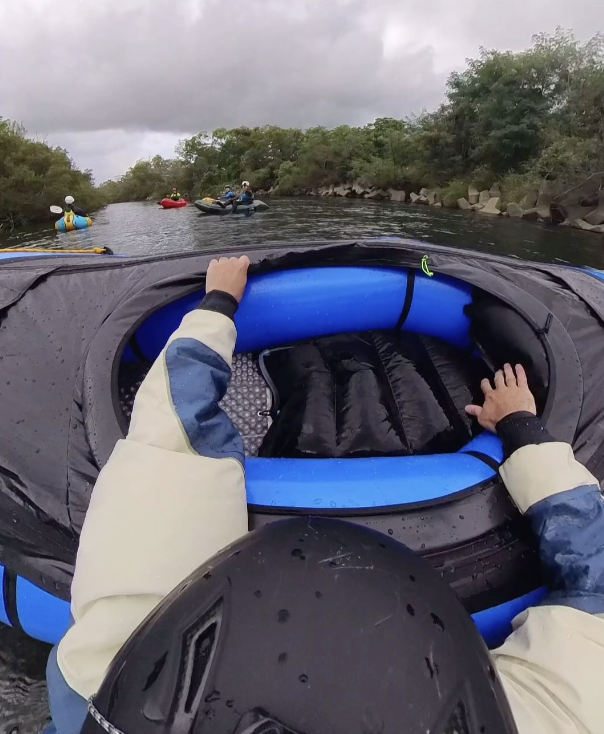
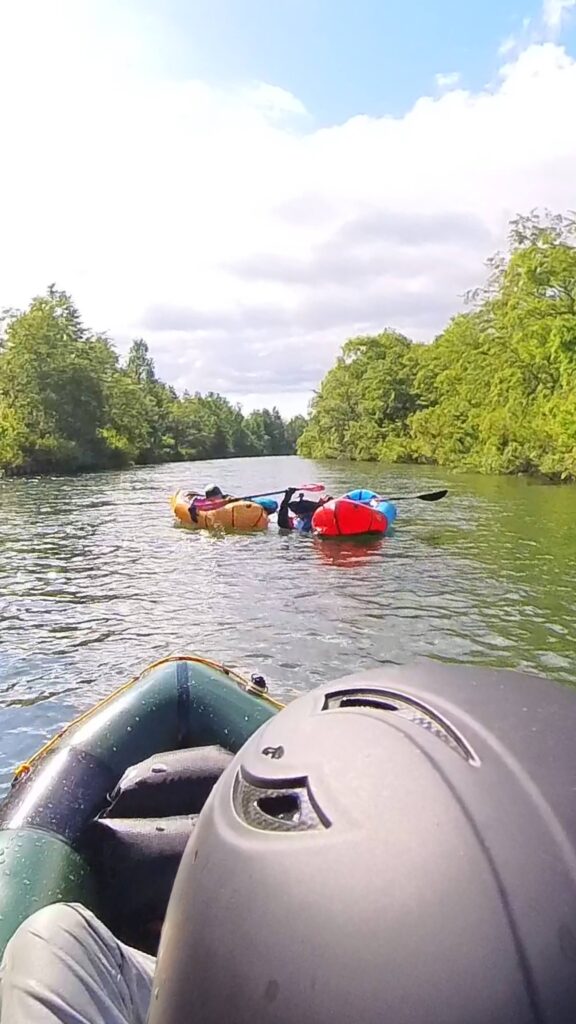
Summers in Hokkaido have been getting genuinely hot in recent years. On this particular September day, the breeze had finally turned pleasant — and the river felt great too. So we used it as an opportunity to practice what happens when things go wrong: a simulated flip, followed by re-entry drills.
Packrafts are remarkably lightweight, and that’s actually what makes re-entry surprisingly tricky the first time. Even paddlers who are comfortable re-boarding a rafting boat or a duckie (traditional inflatable kayak) often find themselves struggling. But once you understand how the lightweight design behaves, getting back in becomes very manageable. Make it a habit — any time you’re in a calm flatwater section, take a few minutes to practice re-entry.
The Key to Getting Back Into Your Packraft
After falling in, your position relative to the current makes a significant difference in how easily you can re-enter.
Picture two scenarios: one where your body is upstream and the packraft is downstream, and one where the packraft is upstream and your body is downstream. The second scenario — packraft upstream, body downstream — is considerably easier for re-entry. The current helps push the boat toward you as you climb back in.
If re-entry feels difficult, take a breath, assess your position in relation to the current, and reposition before attempting to get back on.
Every situation is different, but as a general principle for river safety, being on your boat is safer than being in the water — second only to being on land. So if you fall in, the first priority is to stay calm. Take a breath. Then raise your lower body toward the surface to prevent foot entrapment — getting a foot caught on an underwater obstacle — and float defensively while you assess your options. Then attempt to re-enter.
Practice removes the panic. The more familiar the movement feels in a controlled setting, the less you’ll have to think about it when it actually matters. Stay safe out there — always paddle with experienced companions, and if you haven’t found paddling partners yet, join a guided tour. Avoid going out on moving water alone.
Happy Trails,
コメント