
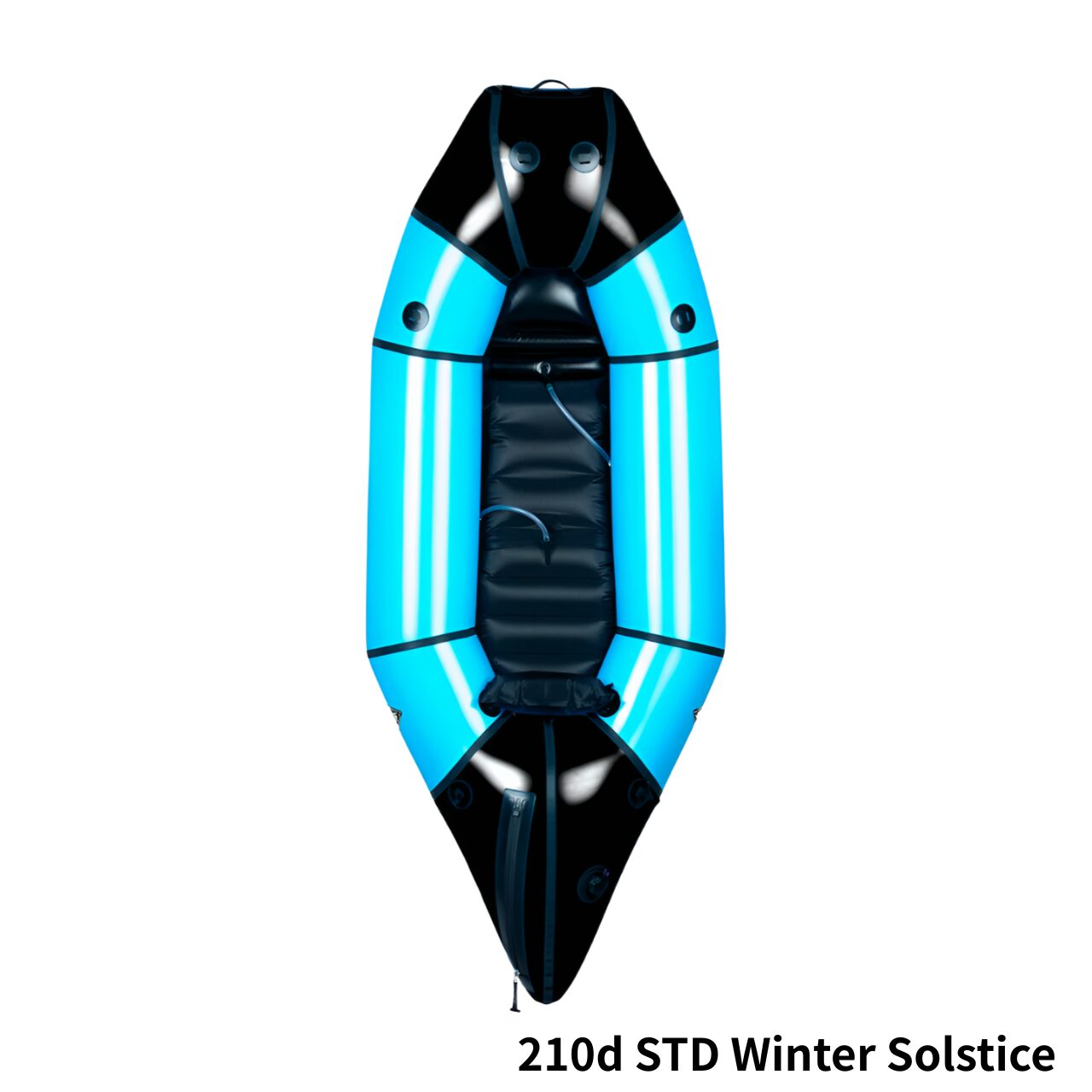
“Self-bailers seem cold” — this is one of the most common questions from people considering the Caribou, especially in Hokkaido.
The short answer: it depends on your conditions and gear.
This article covers why self-bailers have this reputation, when the Caribou self-bailer actually gets cold, practical solutions, and who should still choose it anyway.
Why Self-Bailers Are Called “Cold”
The Caribou self-bailer is designed to drain water that enters the cockpit automatically. As a result, the feet are frequently in contact with water; a small amount of water is always flowing through; and the combination of wind and water pulls heat from the body more effectively.
When the following conditions overlap — cold water temperature, cold air temperature, and slow paddling with long stops — the cold becomes noticeably uncomfortable.
When the Caribou Self-Bailer Tends to Feel Cold
To be direct: the following scenarios make it harder to stay warm.
Snowmelt water in early spring or autumn; cold-water regions like Hokkaido or Tohoku; long flatwater sessions without sustained paddling; and fishing-style use with extended stationary periods.
If these describe your primary use, a self-bailer is hard to call comfortable.
Why People Still Choose the Self-Bailer
That said, the self-bailer offers advantages that outweigh the cold concern for the right paddler.
Water doesn’t accumulate — no bailing. Greater confidence on moving water. Dramatically easier recovery after a flip. Faster entry and exit.
For paddling that involves getting wet and keeping moving — where safety and dynamic comfort matter more than staying dry — the self-bailer often wins.
Practical Warmth Solutions
① Drysuit or dry pants. The most effective option. Lower body stays dry; body temperature is protected. In Hokkaido, effectively essential gear for cold-season paddling.
② Neoprene socks or boots. Foot chill has an outsized effect on overall comfort. 3–5mm neoprene with felt or rubber sole makes a meaningful difference.
③ Don’t force the self-bailer in cold conditions. The most rational solution: open deck in cold seasons, self-bailer when it’s warm. Choosing based on season and field is simply the right call.
(This tends to be when the urge to own two boats begins to make sense.)
Open Deck vs Self-Bailer: At a Glance
| Condition | Open Deck | Self-Bailer |
|---|---|---|
| Cold water | ◎ Warmer | △ Colder |
| Downriver paddling | △ | ◎ |
| Long stops | ◎ | △ |
| Beginners | ◎ | ○ |
Cold conditions → open deck. Active downriver paddling → self-bailer.
The Conclusion
The Caribou self-bailer can be cold under certain conditions — but with the right gear and use case, it’s not a problem at all. In cold regions and low water temperatures, the open deck is the safer default. For downriver use where staying in motion is the goal, the self-bailer is the more comfortable choice.
Neither configuration is universally correct. Choose based on your specific field, season, and gear — and regret becomes much less likely.
Product Links
Caribou LW210d Open Deck [2026] → Web Shop Caribou STD210d Open Deck [2026] → Web Shop Caribou LW210d Self-Bailer with Cargo Fly [2026] → Web Shop Caribou STD210d Self-Bailer with Cargo Fly [2026] → Web Shop
コメント