The Short Answer
Yes — the Zephyr is genuinely accessible for most beginners. The caveat is understanding which type of water it’s designed for. In the right environment, it’s one of the easier packrafts to get started on. In the wrong environment, field limitations apply regardless of skill level.
Why It Works for Beginners
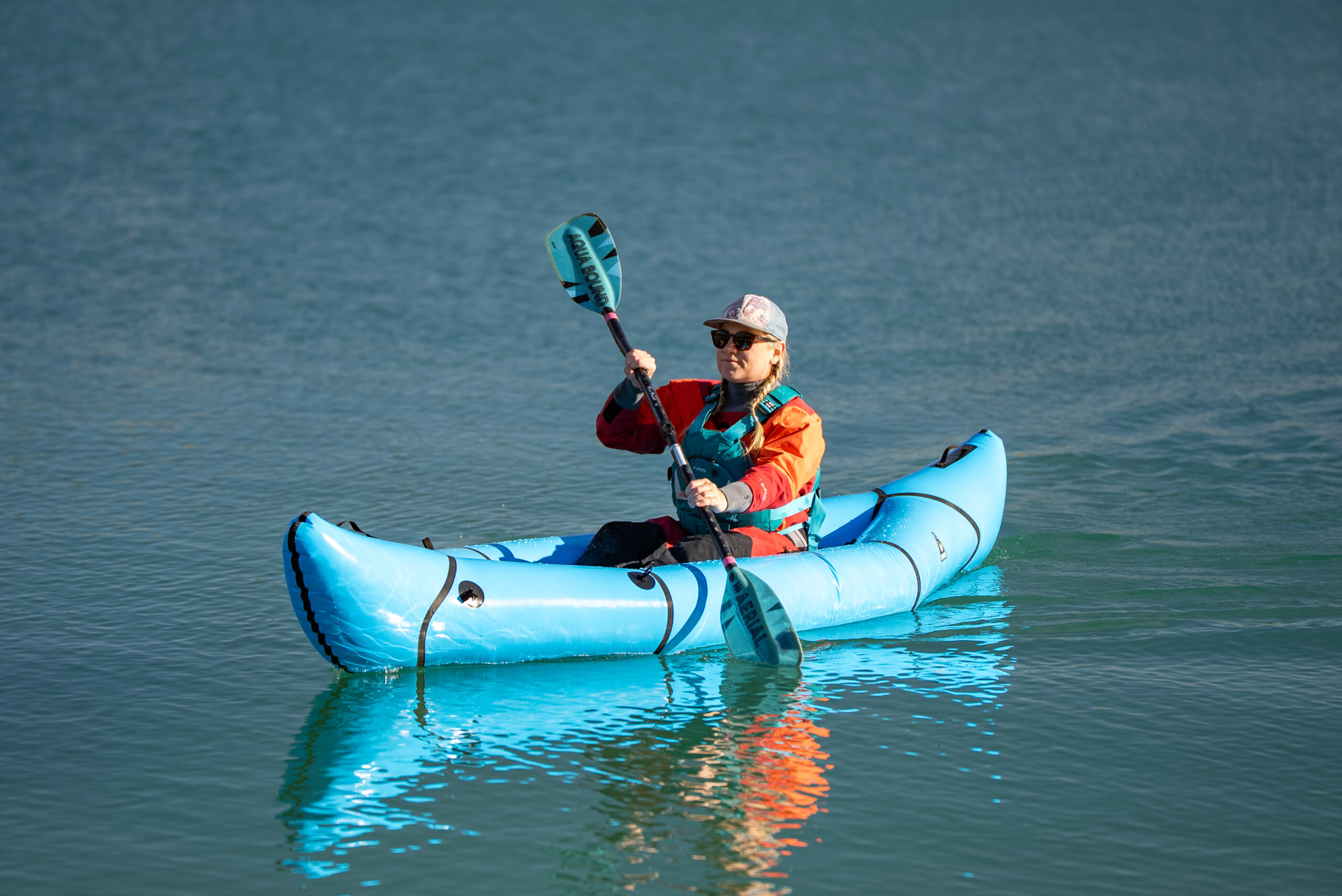
Straight-line stability: The elongated hull tracks well compared to rounded-hull packrafts. For a new paddler whose strokes aren’t yet consistent, this matters — the Zephyr holds a direction without requiring constant correction. It makes it easier to feel like you’re actually going somewhere.
Efficient propulsion: The lower drag design means the boat moves meaningfully with each stroke. Beginners often have inefficient technique early on; the Zephyr partially compensates for that and makes progress feel rewarding rather than frustrating.
Flatwater focus removes the intimidation: The vast majority of beginner anxiety on packrafts comes from moving water — rocks, current, waves. The Zephyr is designed specifically for lakes and calm rivers where none of those factors are present. On still water, there’s simply less to worry about.
Beginner-Friendly Features in Practice
The hull tracks well, meaning paddlers with less arm strength can still make headway. Setup and breakdown are simple — open deck, no complex systems, easy to get on the water quickly. And despite its length, the Zephyr is manageable to turn, reducing frustration from handling mistakes.
Concrete Beginner Use Cases
Lake practice: A shallow lakeside area is ideal for learning stroke basics — feeling one stroke at a time, learning how the hull responds, building confidence before venturing further out.
Travel destination paddling: A calm lake or slow river at a travel destination, paddling for an hour or two with no particular goal. Low pressure, good fun.
Day trips from the car: Drive to a calm water spot, inflate, paddle, deflate, drive home. The Zephyr’s pack-and-go format makes this routine rather than an event.
What to Watch Out For
Avoid whitewater entirely: Even beginner-level rapids are outside the Zephyr’s design scope. There’s no ambiguity here — flowing water with waves, rocks, or current is not where this boat belongs.
Strong wind requires caution: Even on calm water, wind can develop quickly on larger open lakes. The Zephyr is affected by crosswind more than heavier boats. Start in sheltered conditions.
Don’t overload: Heavy gear loads change how the Zephyr handles and reduce both buoyancy margin and tracking. Beginners should start light.
Recommended Practice Steps
- Start in a shallow, sheltered area of a lake
- Focus on single-stroke feel — how much the boat moves per paddle
- Practice with minimal gear; short out-and-back distances
- If possible, paddle with a friend or guide for the first sessions
- Build confidence through repetition before increasing distance or duration
Essential Safety Gear
A PFD (life jacket) is non-negotiable regardless of conditions — always wear one. A dry bag for valuables keeps electronics and documents protected if water enters the cockpit. A small paddle float or extra support isn’t usually necessary on calm water, but knowing your self-rescue options before getting on the water is always worthwhile.
Summary
The Zephyr is a genuine beginner option — easy to paddle on flatwater, intuitive to set up, and forgiving of imperfect technique in calm conditions. It teaches the fundamentals of paddling in an accessible environment. Just keep it on still water, stay out of the wind when conditions aren’t ideal, and keep loads light while building confidence.
Product Link
Zephyr 210d Open Deck [2026] — One Size → Web Shop

コメント