“Isn’t the Gnarwhal just for rapids?”
This question comes up a lot. The short answer:
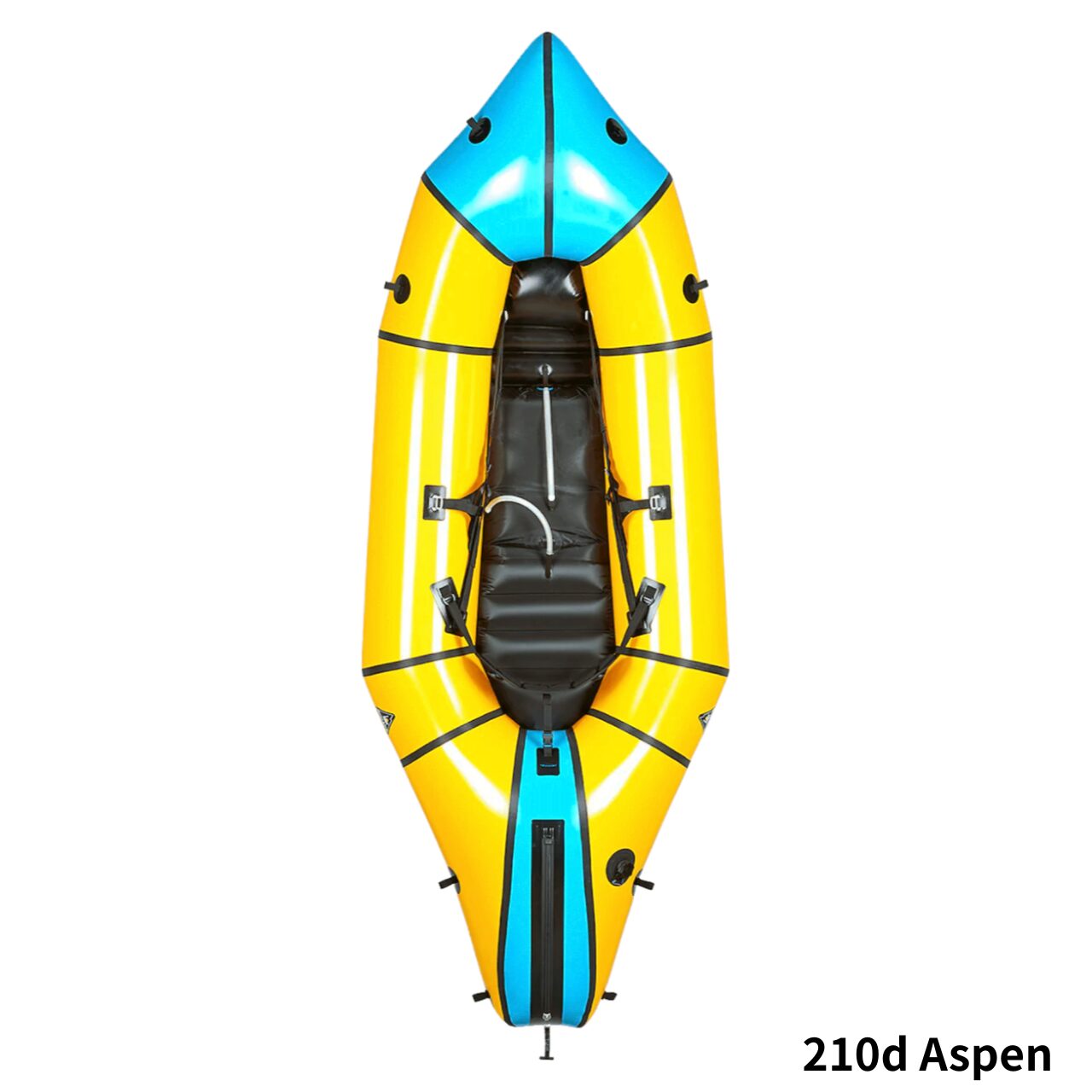
The Gnarwhal is not a whitewater-only boat. It’s designed to do something more specific — make river travel and skill development happen at the same time.
Why People Assume It’s Whitewater-Only
Self-bailing packrafts carry a particular reputation:
- Water gets in
- You get wet
- Falls are part of the deal
- Technique is the priority
That framing makes them sound like they’re built exclusively for rapids, and poorly suited to touring. But the Gnarwhal’s design logic is different.
What the Gnarwhal Is Actually Built Around: Forgiveness
The Gnarwhal’s defining characteristic isn’t speed. It isn’t light weight either.
It’s forgiveness — a wide tolerance for imperfect execution.
- Lose your posture in a wave: you can recover
- Miss a ferry: you don’t get washed far
- Flip: you can re-enter and keep paddling quickly
- Make a mistake: the boat lets you continue learning
In other words, it keeps moving. And for river travel over distance, that’s an extremely important quality.
What Actually Drains You on a Long River Trip
Distance isn’t what tires you out on a multi-day river trip.
What does:
- Repeated unplanned landings
- Time spent draining water from the boat
- Constant position resets
- The energy cost of recovering from mistakes
The Gnarwhal’s self-bailer handles water automatically. Mistakes don’t require a full stop and reset. The result: less energy spent on recovery, more left for the distance.
That’s a genuine long-trip advantage.
Gnarwhal vs Deck Boat — A Touring Perspective
Deck boats offer:
- Staying dry
- Warmth retention
- High straight-line stability
But:
- Mistakes tend to stop progress entirely
- Recovery requires more deliberate action
- The psychological pressure of keeping the deck sealed adds up over distance
The Gnarwhal offers:
- Getting wet (with appropriate drywear, this is manageable)
- Not stopping
- Higher operational freedom
- A wider range of river conditions it can handle
On a long river trip, continuity of progress often matters more than comfort in any individual moment.
Load Capacity
The Gnarwhal carries serious weight.
| Use case | Capacity |
|---|---|
| Whitewater-optimized | 9–13 kg |
| Standard river touring | up to 33 kg |
| Long-distance big rivers | up to 54 kg |
The Cargo Fly keeps the load low in the hull, improving stability and paddling feel. This is a touring-friendly characteristic — not a whitewater-specific one.
Who Is the Gnarwhal Right For?
The Gnarwhal fits paddlers who:
- Want to travel rivers, not just run rapids
- Want to develop skills while they’re doing it
- Want to avoid serious risk while still being challenged
- Find flat-water-only touring unsatisfying
Put simply: paddlers who want to get better while going further.
Summary
The Gnarwhal is not a rapids boat. It’s also not a touring boat in the conventional sense.
It’s a boat designed to use the full range of what a river offers.
- Calm sections: comfortable and efficient
- Light whitewater: room to practice
- Stronger current: capable of handling it
That breadth of usefulness — across conditions, across skill levels, across trip types — is what the Gnarwhal is actually designed around.
コメント