
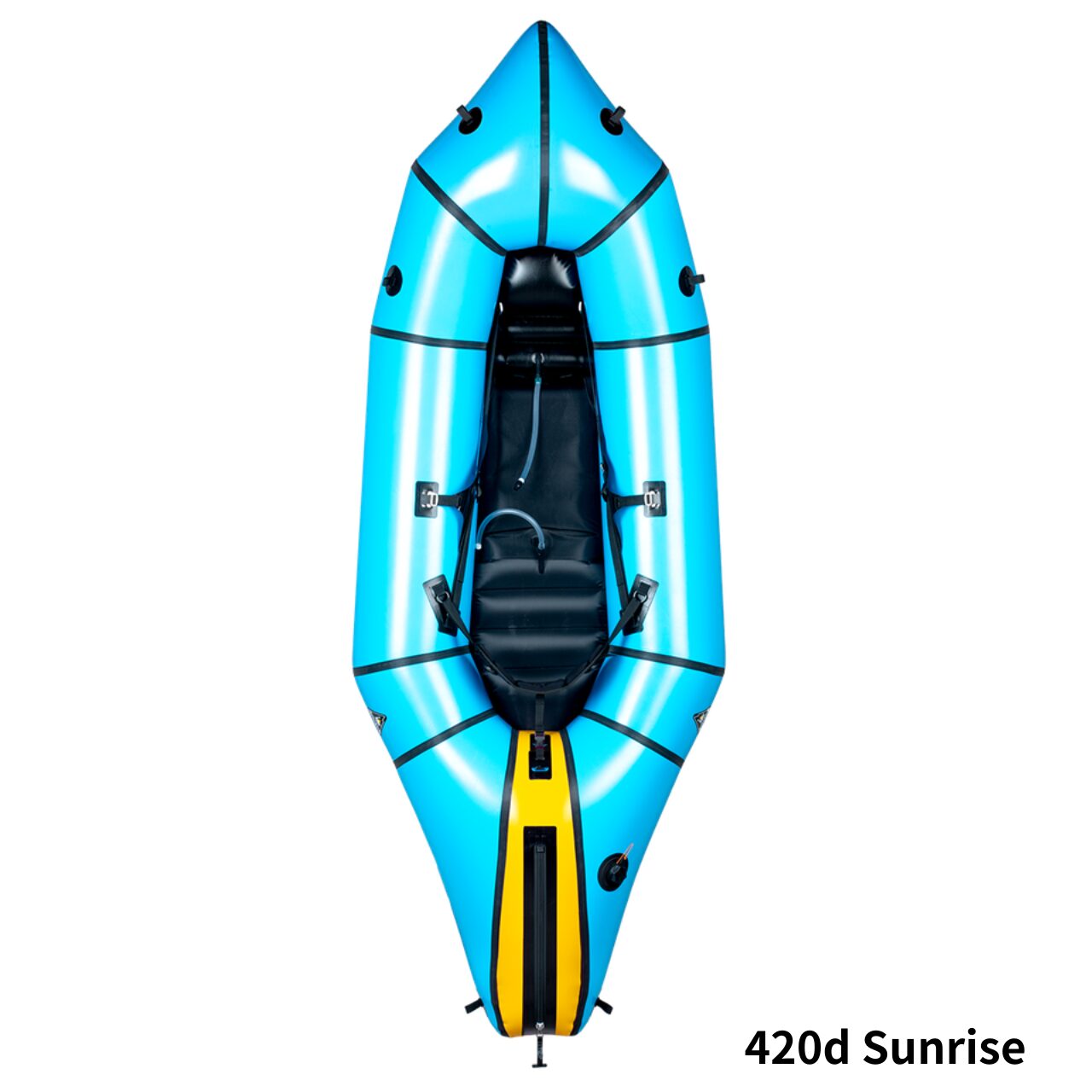
The direct answer: yes, it’s cold. In Hokkaido, paddling without a drysuit in the Gnarwhal is a short window each year. That said, “cold” doesn’t mean “unusable.” Understanding why it chills you makes it possible to use the Gnarwhal comfortably across a wider range of conditions than you might expect.
Why It’s Cold: Three Mechanisms
① Your feet are wet the entire time. Water flows in and drains continuously through a self-bailer. The floor is always wet. This means your feet are in contact with cold water for the duration of every session, and heat loss is constant.
② Evaporative cooling from wind. Even with a wetsuit or drysuit, wind hitting wet fabric causes rapid heat loss. This is the primary source of chill on the water — more significant than the water itself in many conditions.
③ Cooling accelerates when you stop. While paddling, your body generates enough heat to stay ahead of the chill. When you stop — at a lunch spot, in an eddy, during a portage — the cold catches up quickly.
How Cold by Water Temperature
Based on drysuit use:
| Water temperature | Perceived comfort |
|---|---|
| 18°C+ | Comfortable |
| 15°C | Slightly cool |
| 12°C | Uncomfortable over long sessions |
| 10°C | Clearly cold |
| 8°C or below | Rest stops become hazardous |
In Japan’s seasonal terms: comfortable in summer, acceptable in early summer and early autumn, cold in spring and snowmelt.
But That Doesn’t Make It Unusable
The Gnarwhal’s self-bailer design exists for good reason. Its major advantages — fast re-entry after a swim, no bailing required, excellent practice efficiency — are exactly what make it so effective for whitewater learning. For paddling where getting wet is expected and accepted, it’s close to ideal. The discomfort comes from trying to stay dry in a boat designed to be wet.
Cold-Weather Management
Gear: Thick neoprene socks; drysuit with warm underlayers; plan to keep moving.
Behavior: Avoid extended rest stops; choose calmer wind conditions; limit sessions when water is below 10°C.
Seasonal Suitability
| Season | Suitability |
|---|---|
| Midsummer | ◎ |
| Early summer | ○ |
| Autumn | ○ |
| Spring | △ |
| Snowmelt season | Challenging |
The Right Way to Think About It
The Gnarwhal is not a cold boat — it’s a wet boat. Approach it expecting to be wet, dress for immersion, keep moving, and it’s highly comfortable. Try to use it like a dry deck boat and it becomes a cold boat. The design assumption is contact with water; the paddler’s job is to be equipped for that.
When to Use It, When to Think Twice
For practice, downriver sessions, and warm-water whitewater → the Gnarwhal is excellent. For long multi-hour trips, extended cold-weather seasons, or year-round Hokkaido paddling → a closed-deck model has a clear thermal advantage.
Product Links
Gnarwhal 210d Self-Bailer with Cargo Fly [2026] → Web Shop Gnarwhal 420d Self-Bailer with Cargo Fly [2026] → Web Shop
コメント