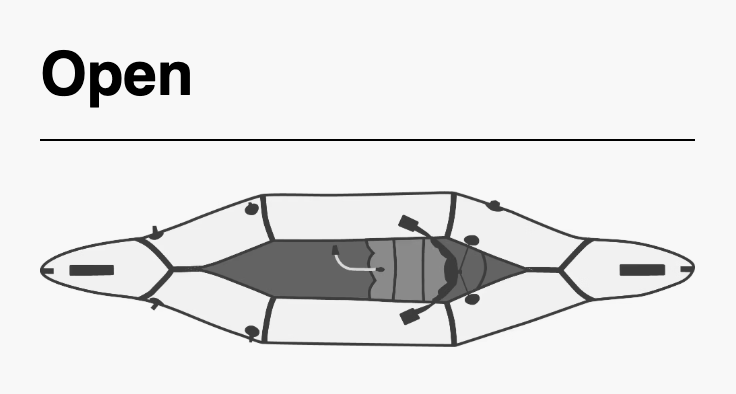
The Zephyr is a travel and flatwater model. But what does that mean in real use? Here are five field types with concrete scenarios for where it performs best — and where to leave it at home.
1. Lakes — The Best Match
Early morning paddle: Calm wind, mirror-flat surface, 1–2 hours of relaxed cruising. The Zephyr’s straight-line tracking means each stroke carries further than on a rounded-hull packraft. Less effort, more distance, quieter time on the water.
Campsite lakes: Auto-camping next to a lake, paddling at dawn and dusk, sharing the boat with a partner or child. The Zephyr sets up quickly and doesn’t demand complicated preparation for a short session — it’s well-suited to spontaneous use.
Caution: The Zephyr is affected by crosswind more than heavier boats. Strong wind conditions or large wave-generating lakes are not appropriate.
2. Calm Rivers (Flatwater)
Lower river sections, slow-moving wide channels, impounded stretches — any river where the current is gentle and technical paddling isn’t required. The longer hull means the Zephyr picks up and holds speed efficiently once moving, making a downstream float a relaxed, energy-efficient experience.
A typical session: drive to a put-in upstream, drift down at a relaxed pace, shuttle back. The Zephyr suits this format well.
Ideal river character: Virtually no rapids; primarily Class I or below; scenery-focused paddling.
Not appropriate for: Continuous rapids; technical rock gardens; light whitewater. For those conditions, the Caribou or Gnarwhal are safer options.
3. Travel Destinations — Where the Zephyr Truly Earns Its Place
Fly-in travel: Pack the Zephyr in a suitcase, pick up a rental car at the destination, stop at a lake or calm river on the way. This is physically impossible with a rigid recreation kayak. With the Zephyr, it’s a normal travel day. Hokkaido, Okinawa, international protected water destinations — the Zephyr travels like luggage.
Road trips: RV parks, lakeside campsites, roadside stops with water access. The Zephyr doesn’t take up meaningful space in a vehicle and isn’t a burden on the trip plan. It goes wherever you go.
4. Bikepacking × Flatwater
At 3.6 kg the Zephyr is heavier than the Scout, but is realistic on an e-bike or adventure bike setup. Lake exploration mid-route, reservoir side trips, and calm waterway crossings are all viable. The Zephyr adds a water dimension to routes that weren’t originally water-focused.
5. What to Avoid
Open ocean and exposed coastal paddling; large wind-exposed lakes with significant wave action; whitewater of any class; multi-day heavily loaded river travel. The Zephyr is a focused, deliberately limited model. Those limitations are part of what makes it excellent at what it does.
When the Zephyr Peaks
Morning lakes. Travel destination water. Gentle river drifts. Camping with water activity. Recreation kayak replacement for travel. The Zephyr is built for the experience of moving quietly over calm water — and in those moments, it does it exceptionally well.
Product Link
Zephyr 210d Open Deck [2026] — One Size → Web Shop
コメント