
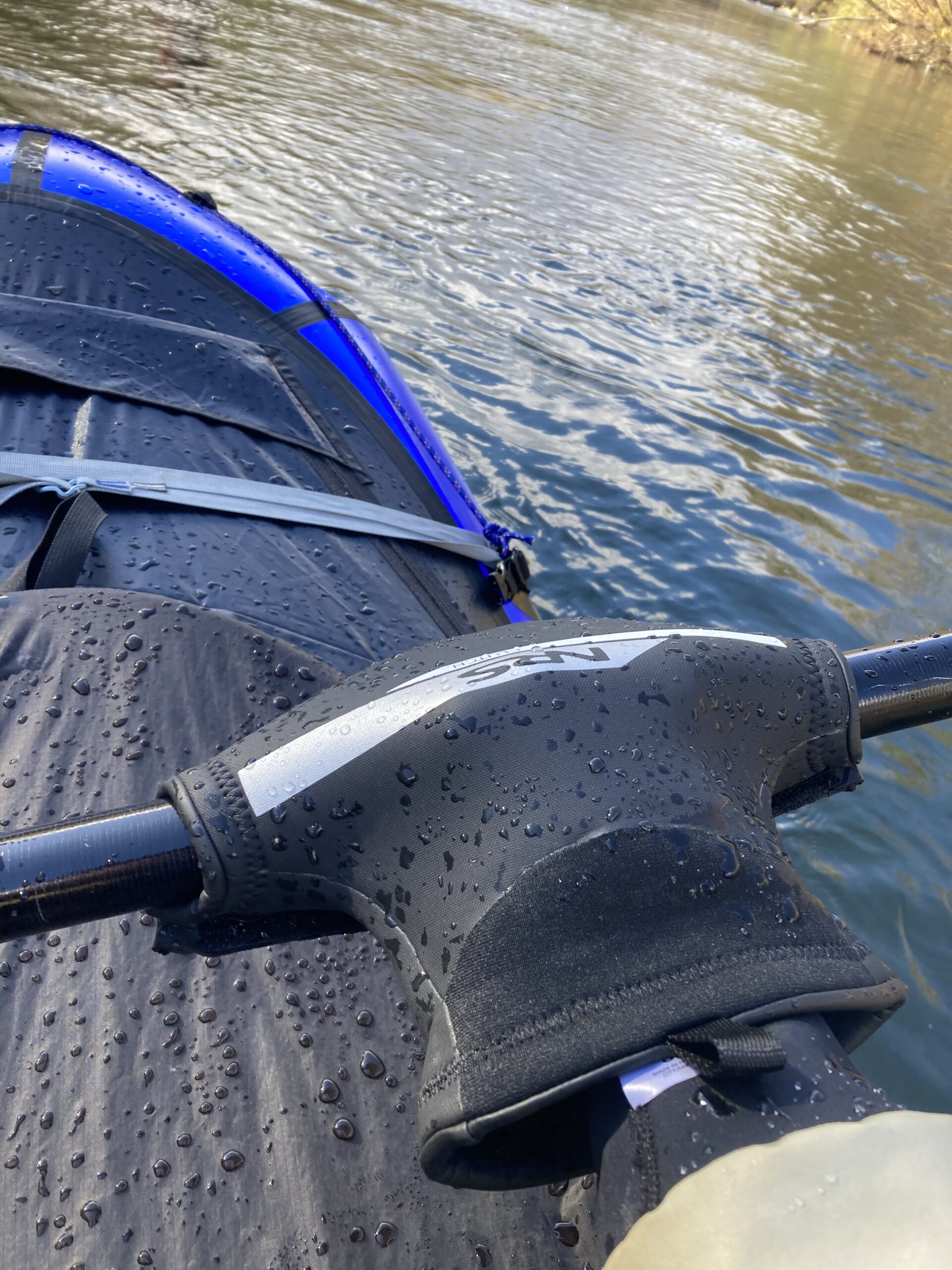
During a March packrafting session, my hands got dangerously cold. I had tried Temres waterproof gloves for insulation, but they quickly proved impractical for actual paddling — if you fall in, water floods the inside of the glove and insulation becomes worthless. That experience pushed me to think more seriously about hand protection for cold-weather paddling.
In Hokkaido, from autumn through the snowmelt flooding of spring, water temperatures stay low year-round. Combine that with cold air and wind, and any exposed skin not covered by a drysuit — ears, hands — goes numb almost instantly. Beyond discomfort, this means reduced grip strength, accelerated fatigue, and real hypothermia risk.
Choosing Pogies or Gloves for Packrafting
Various brands make pogies and paddling gloves, but the key differences come down to material and wearing style. Choose based on your paddling region and conditions.
Material
Nylon (water-resistant fabric) Not suited for truly deep-winter conditions, but a good choice when temperatures start to drop in autumn. Lightweight and easy to pack. Works well for shoulder seasons when air temperatures are cool but not extreme.
Neoprene (insulates even when wet) The choice for anyone who is especially sensitive to cold, or for those paddling in late autumn, mid-winter, or during the high-water snowmelt period in spring. Obviously unnecessary in summer. Neoprene continues to provide warmth even after getting wet, which makes it significantly more reliable in worst-case scenarios.
Wearing Style
Pogies — attached to the paddle shaft, worn only while paddling Your hands are bare inside the pogie, gripping the shaft directly — which gives excellent paddle feel and blade angle awareness. The enclosed design means even wave splashes won’t chill your hands while you’re paddling. The downside: when you’re off the paddle (scouting, portaging, resting), your hands have no protection, so you’ll need a separate pair of gloves for those moments. If you fall in, your hands are exposed immediately.
Open-palm mitts — worn continuously, with the palm area open A good middle-ground option. The palm opening means slightly less direct contact with the shaft compared to bare-hand pogies, but the difference is minor in practice. The key advantage: your hands stay reasonably warm even when you’re not actively paddling, and in a swim situation you still have some coverage. This style balances paddle feel with off-paddle warmth fairly well.
Full mitts or 5-finger gloves — fully enclosed, palm included Keep your hands warm both on and off the paddle. The tradeoff is feel: even a single layer of material between your palm and the shaft noticeably changes how the paddle blade angle registers. This can make it harder to sense blade orientation during strokes — a real issue in more technical water.
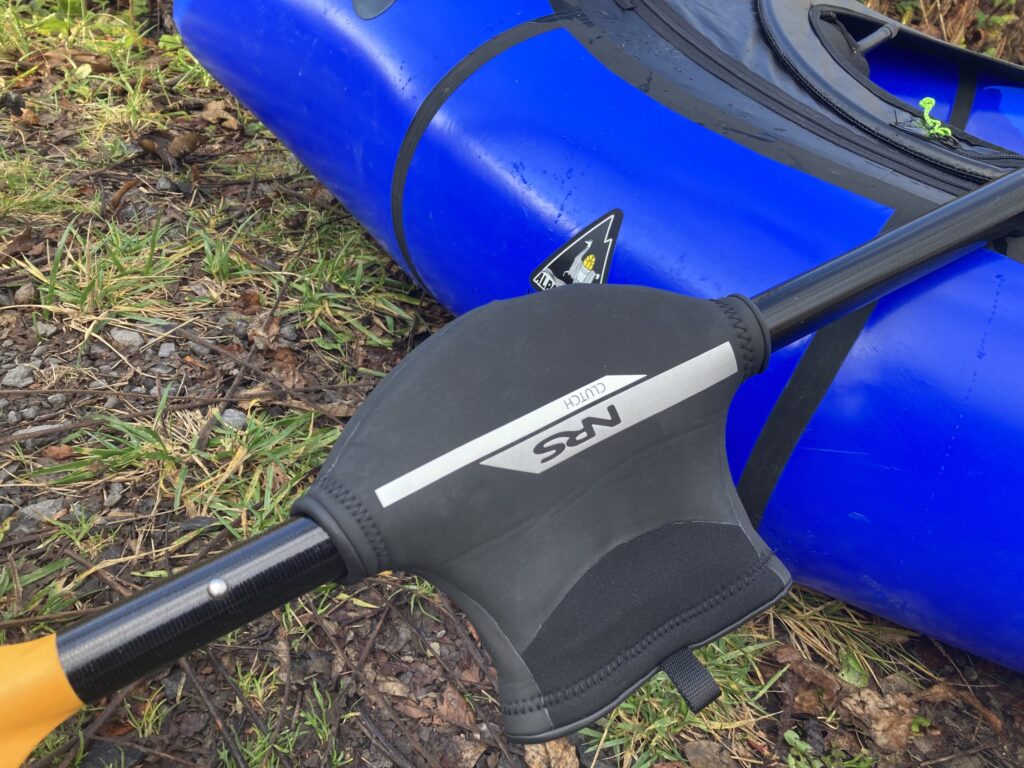
Each style has clear tradeoffs, and the right choice depends on where and how you paddle. For my own use — prioritizing paddle feel, and paddling river touring routes without serious whitewater sections in winter — I settled on the NRS Clutch Pogies in neoprene, mounted on the paddle shaft.
The result: comfortable, warm paddling from autumn all the way through spring snowmelt season. 🙌


コメント