
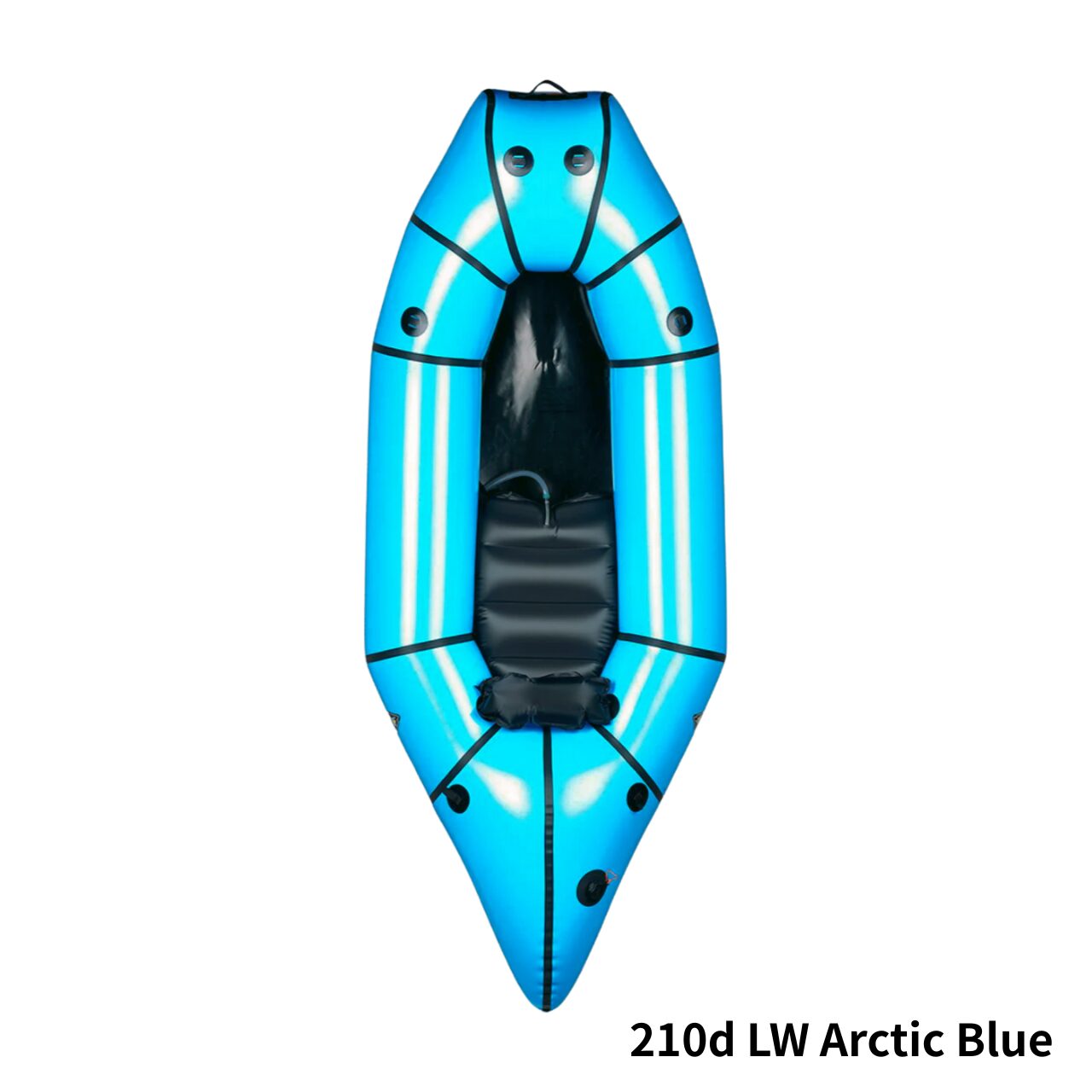
When researching the Alpacka Raft Caribou, most people pause at one thing: “LW (Lightweight) 210d.”
Is it durable enough? Will it tear if it hits a rock or driftwood? Can it hold up over the long term? Given the price involved, these are completely reasonable concerns. This article breaks down what LW210d actually means, what it’s designed for, and where its limits are.
What LW210d Actually Is
The “210d” in LW210d refers to denier — a measure of thread thickness. Higher numbers generally mean heavier, thicker fabric.
But the critical point is this: 210d does not mean “fragile.”
The Alpacka Raft LW210d fabric features high-quality TPU coating, is engineered to complement the hull’s specific design characteristics, and has a track record of real field use. Denier numbers alone don’t tell the full story.
What LW210d Is Designed For
The primary intended fields for the Caribou LW210d are lakes and still water, calm rivers with few rapids (lightwater), bikepacking, and backpacking-approach trips.
Within this range, durability is not a problem under normal use.
Where it moves outside its intended range: actively running whitewater with rapids; repeatedly dragging the hull across rocky shallows; paddling heavily loaded into rough conditions. These uses are beyond what LW210d is optimized for — though not entirely impossible.
Why the Caribou Works with LW210d
The Caribou’s durability comes from its overall design, not the hull fabric alone. Three key elements: a weight-optimized design that avoids unnecessary reinforcement; a hull shape built to handle cargo loads; and a separately designed 840d nylon floor.
The floor is where the most contact and stress concentrate. By using a significantly heavier material for this panel, the Caribou achieves a well-balanced whole — even with LW210d on the upper hull.
Where LW210d Requires Care
LW210d is not fragile — but it’s a fabric where how you treat it affects how long it lasts.
Things to avoid: dragging the hull across shallow, rocky riverbeds; landing on rocks with high air pressure; repeatedly running lines where hull abrasion is likely. These habits accelerate wear on any lightweight fabric, not just LW210d.
Whether LW210d feels durable over time often comes down to how carefully it’s used.
The STD210d Alternative
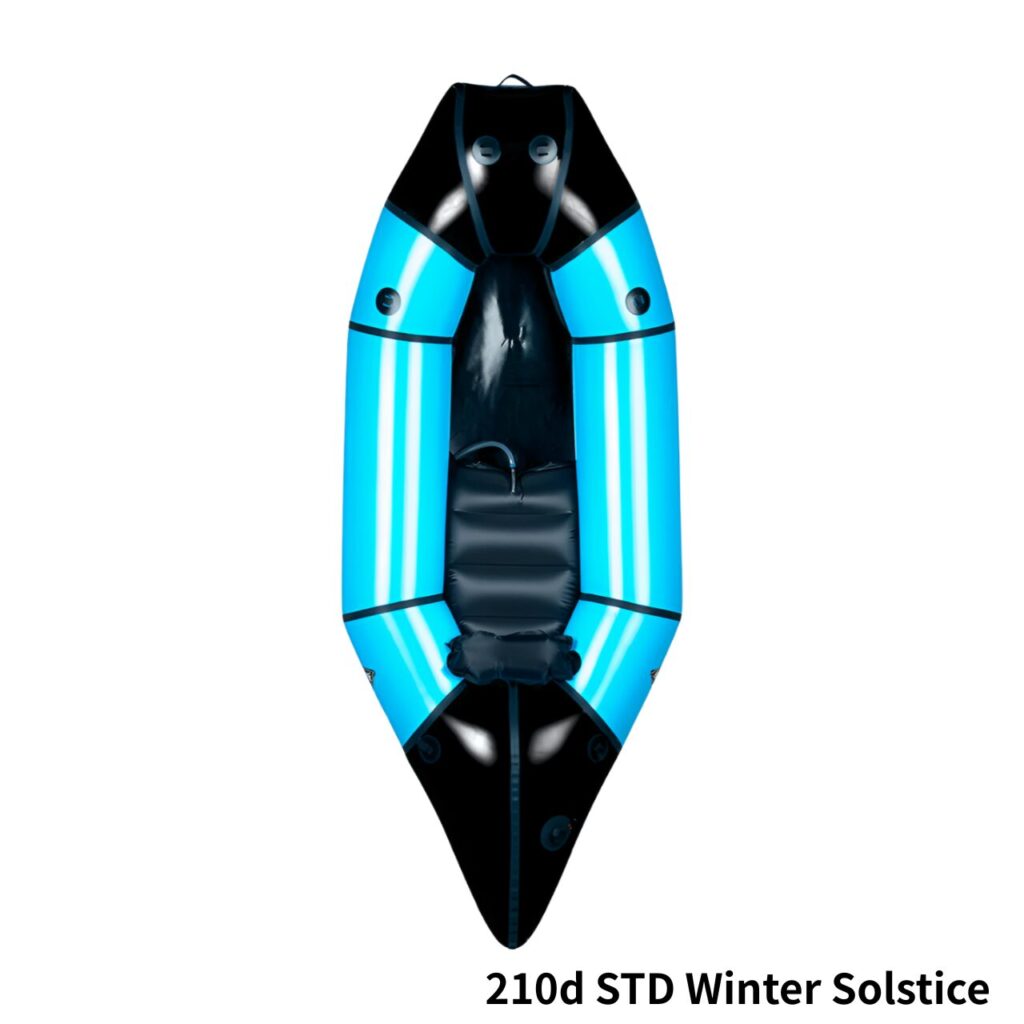
The Caribou is also available in STD210d — the standard weight option.
STD210d adds approximately 0.34 kg; offers greater peace of mind for durability; and is frequently recommended as a replacement for the discontinued Classic model.
If you want to prioritize confidence over minimum weight, or plan to use the boat across a wider range of conditions, STD210d is a natural choice.
The Conclusion: LW210d Is Not a “Worrying” Material
Used within its intended range and handled with care, LW210d is a fully reliable fabric. If you’re planning to paddle harder water or prefer to use gear without thinking too much about it, STD210d is the lower-regret choice.
Ultimately, the Caribou is a boat you choose based on where you’re going and how you want to paddle — not on which denier number is printed on the spec sheet.
Product Links
Caribou LW210d Open Deck [2026] → Packraft Hokkaido Web Shop
Caribou STD210d Open Deck [2026] → Packraft Hokkaido Web Shop
コメント