- The Zephyr’s Load Character
- Scenario 1 — Day Lake Touring (Best Match)
- Scenario 2 — Light Overnight (1 Night)
- Scenario 3 — Photography Touring
- Scenario 4 — Heavy Camping Load (Not Recommended)
- Three Basic Packing Rules
- Comfort by Load Weight
- Considering Paddler Weight
- Load Styles That Suit the Zephyr
- Summary
- Product Link
The Zephyr’s Load Character
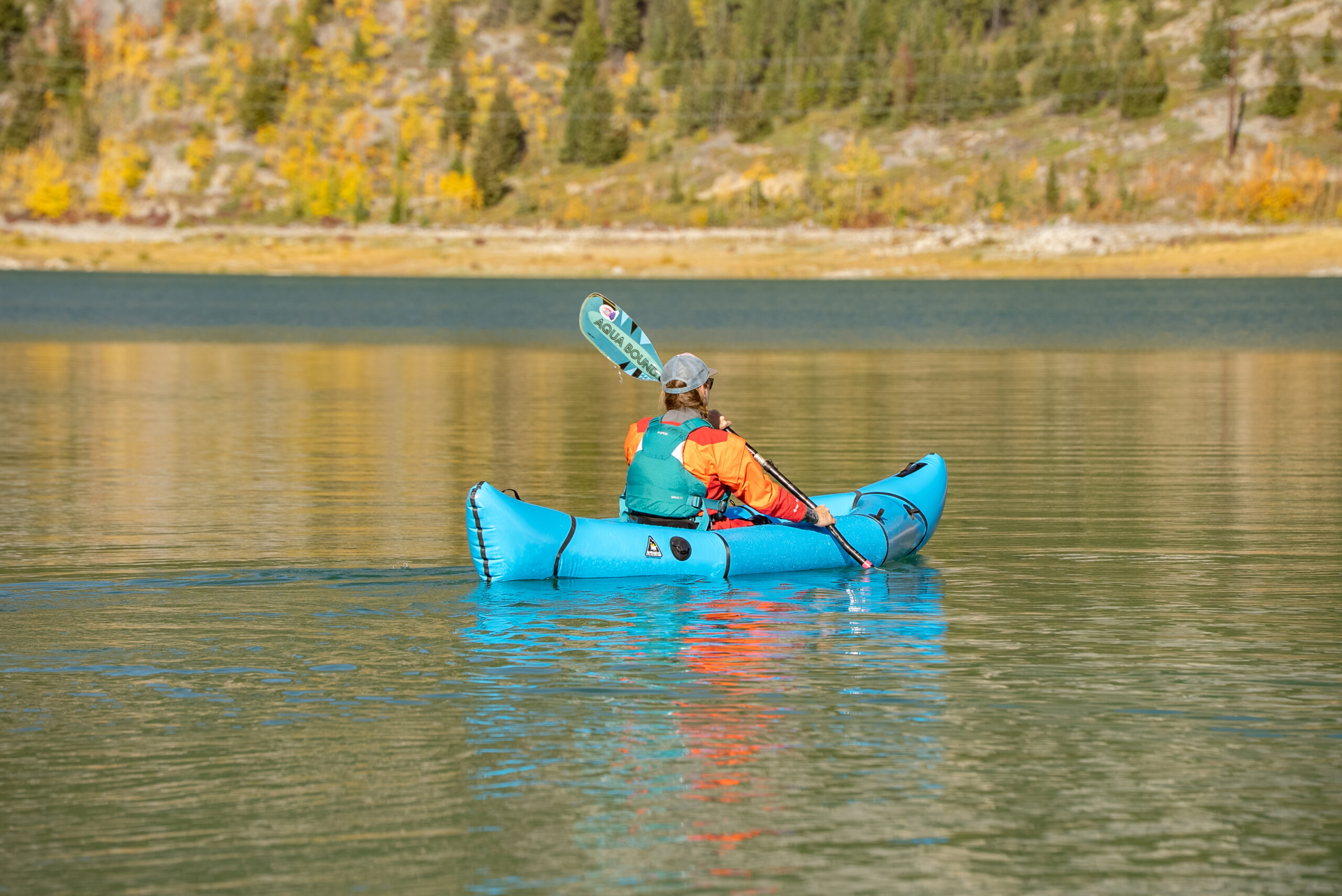
The Zephyr is a slim, long-hull, light-weight boat designed for flatwater. Think of it as a light-to-moderate load model — the sweet spot is day trips and minimal overnight kit, not full expedition packing.
Scenario 1 — Day Lake Touring (Best Match)
Total load target: 5–8 kg
Typical gear: 20L dry bag, wind shell, rain jacket, snacks, 1L water bottle, small camera, basic first aid kit.
Placement: dry bag at the feet forward; small items bag on deck; heavier items centered in the hull.
How it paddles: balanced trim, virtually no speed reduction, comfortable throughout. This is the Zephyr operating exactly as designed.
Scenario 2 — Light Overnight (1 Night)
Total load target: 8–12 kg
Typical gear: 30L dry bag, lightweight tent, down sleeping bag, sleeping pad, cookpot, one day of food.
Placement: bulky light items (sleeping bag, clothing) at the feet forward; compressed tent and pad on deck; cook kit centered.
How it paddles: waterline drops slightly; tracking remains; acceleration feels a little heavier. This is the practical limit of comfortable touring on the Zephyr — workable but noticeably different from the day trip experience.
Scenario 3 — Photography Touring
Total load target: approx. 10 kg
Typical gear: mirrorless or DSLR body, waterproof case, lightweight tripod, extra lens.
Key considerations: heavy items kept close to the paddler’s center of gravity; left-right balance maintained carefully; quick-access placement for camera use on the water.
The Zephyr’s tracking stability makes it a good platform for photography paddling — holding a straight line while composing a shot is easier than on a rounder hull.
Scenario 4 — Heavy Camping Load (Not Recommended)
Total load: 15 kg+
When this threshold is crossed: hull sits noticeably lower in the water; turning becomes sluggish; wind and small waves affect handling more; foot space is compromised.
This is outside the Zephyr’s design intent. For full-kit camping trips, the Caribou or Expedition are better suited.
Three Basic Packing Rules
Heavy items go in the center: Forward-heavy packing causes bow sink and tracking problems.
Keep the load low: Stacking gear high raises the center of gravity and reduces stability.
Balance left and right: Asymmetric loading causes the hull to track off-center.
Comfort by Load Weight
| Load | Comfort |
|---|---|
| Up to 8 kg | Excellent |
| 8–12 kg | Practical range |
| 12–15 kg | Noticeably heavy |
| 15 kg+ | Not recommended |
Varies with paddler body weight.
Considering Paddler Weight
For paddlers around 60 kg: up to 10 kg load remains comfortable. For paddlers 75 kg+: loads over 10 kg are noticeably felt in handling.
The Zephyr doesn’t have a large absolute buoyancy reserve, so total weight (paddler + gear) is the relevant number to think about, not gear load alone.
Load Styles That Suit the Zephyr
Ultralight touring, photography trips, day expeditions, minimal one-night camps.
Styles that don’t suit it: Full campfire setup with heavy gear; fishing with extensive tackle; long-distance expeditions with multi-day supply loads.
Summary
The Zephyr is designed for traveling light, efficiently, and beautifully. Pack it with lightweight gear, maintain balance, and keep load below 12 kg — and the result is a touring experience that’s hard to match for flatwater travel.
Product Link
Zephyr 210d Open Deck [2026] — One Size → Web Shop
コメント