“Both can carry two people — so what’s actually different?”
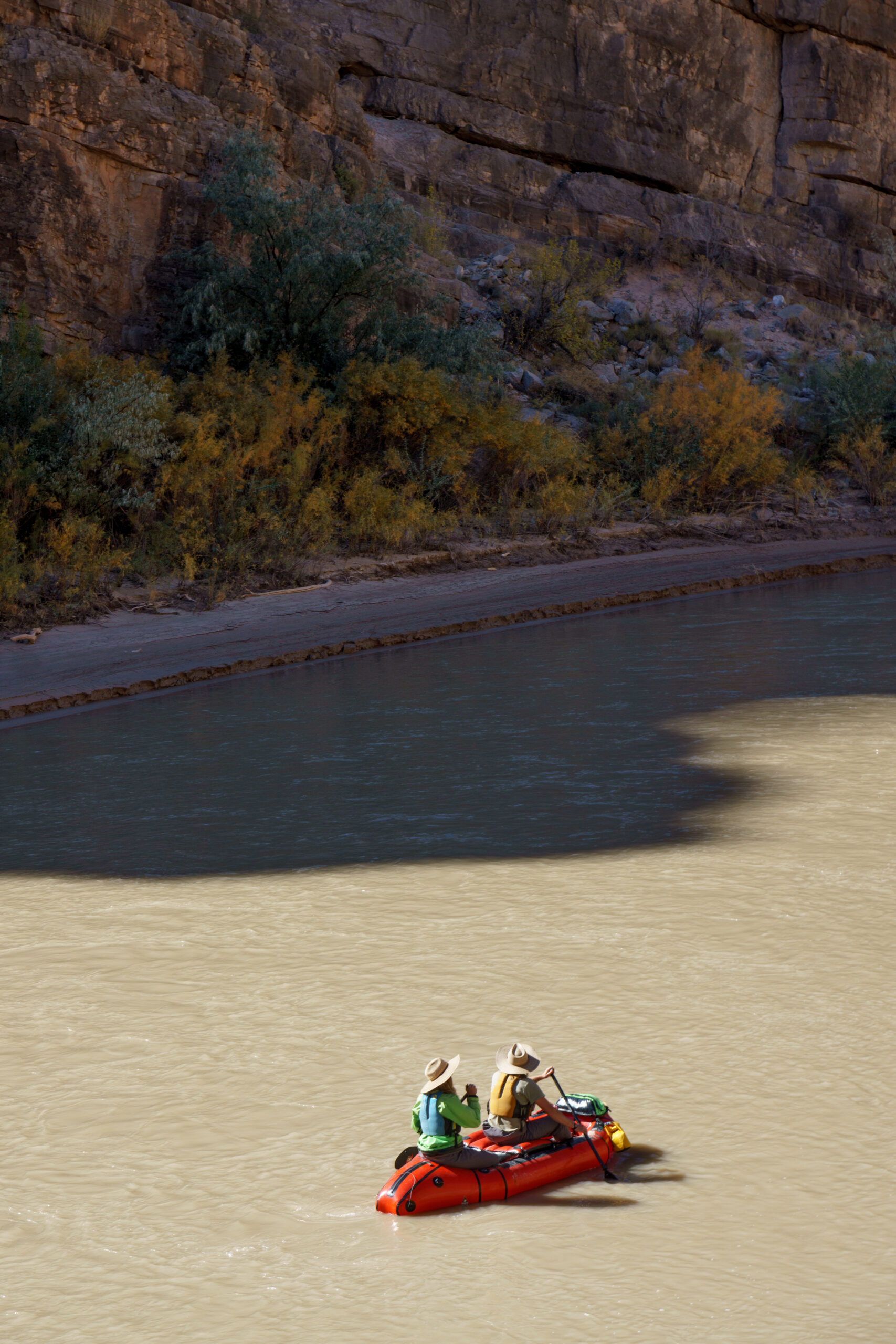
The Rendezvous and Forager are both multi-person AlpackaRaft models, but they’re built around opposite priorities. The Rendezvous is fishing and flatwater-first. The Forager is versatility-first. That difference runs through every design decision in both boats.
This article compares the two across design, water compatibility, and use cases to help you decide which one fits.
The Core Difference in One Line Each
Rendezvous: Fishing and flatwater, optimized without compromise. The only packraft that lets you cast standing up.
Forager: Maximum versatility. Families, hunting, whitewater — one boat that covers everything.
These aren’t competing for the same buyer. The question is which description fits your actual use.
Spec Comparison
| Rendezvous | Forager | |
|---|---|---|
| Length | 335cm | 315cm |
| Width | 102cm | 109cm |
| Weight | Approx. 4.5kg | Approx. 6.3kg |
| Deck | Open deck | Self-bailer only |
| Hull fabric | 210d nylon | 420d nylon |
| Central thwart (standing capability) | ◎ | × |
| Whitewater capability | × | ◎ |
| Load capacity | High | Maximum in lineup |
| Fishing suitability | ◎ | ○ |
| Hunting suitability | × | ◎ |
| Children and pets | △ | ◎ |
The Most Important Design Differences — Thwart vs Self-Bailer
The Rendezvous: The Thwart System
The Rendezvous’s defining design feature is its hull-integrated central thwart — a fixed crossbar that serves as the forward paddler’s seat.
Two things follow from this:
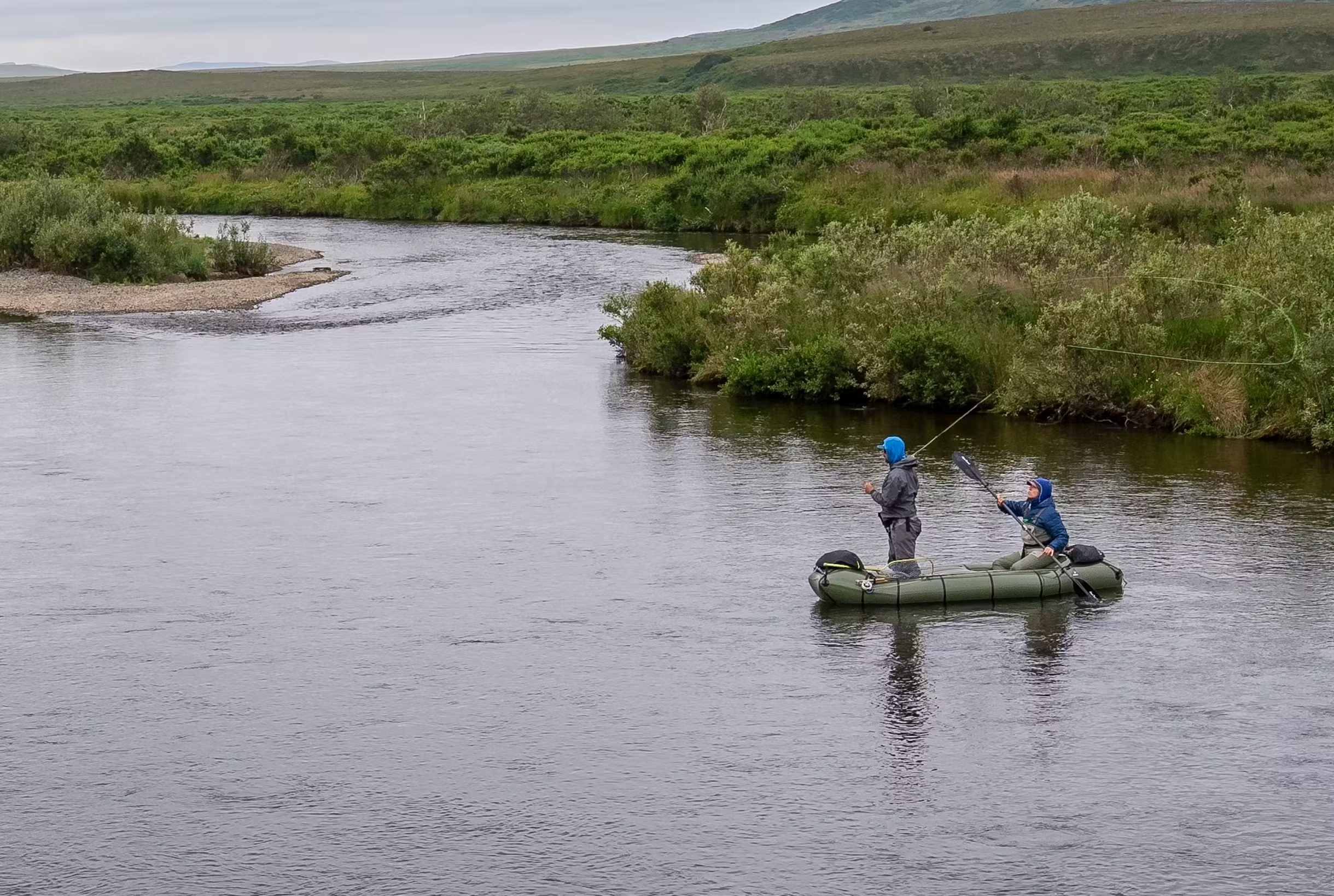
Standing is possible: The forward paddler can stand on the thwart. So can the rear paddler. For fishing, this is decisive — elevated sightlines, natural casting form, better backcast clearance, and the ability to cast over obstacles are all enabled by standing.
No extra parts: The thwart is built into the hull. There’s no separate passenger seat to carry, set up, or manage. Inflate and go.
The Forager: The Self-Bailer
The Forager’s defining design feature is its self-bailing floor — water that enters the cockpit drains automatically.
Two things follow from this:
Whitewater becomes accessible: The self-bailer is what makes Class III–IV rapids possible in a two-person packraft. Without it, heavy current and waves quickly fill an open deck boat.
Durability for demanding use: The Forager uses 420d nylon vs the Rendezvous’s 210d. This supports the Forager’s hunting and heavy-load applications.
The Rendezvous can do what the Forager can’t — stand and cast. The Forager can go where the Rendezvous can’t — into whitewater.
Water Compatibility
| Water type | Rendezvous | Forager |
|---|---|---|
| Lake and flatwater | ◎ | ◎ |
| Gentle current (Class I) | ◎ | ◎ |
| Light riffles (Class II) | △ | ◎ |
| Class III–IV whitewater | × | ◎ (two experienced paddlers) |
The Rendezvous is an open deck boat. It belongs on flatwater and gentle current. Waves and significant current can swamp it quickly. If your intended rivers include anything beyond light moving water, the Forager is the appropriate choice.
Use Case Breakdown
Fishing
Rendezvous is the better choice.
Standing cast capability via the thwart, comfortable two-adult capacity, stable flatwater handling — all of it is designed around fishing. The Forager can drift fish, but it can’t do what the Rendezvous does: let the angler stand up.
Two-Adult Flatwater Touring
Rendezvous is the better match.
Lighter (4.5kg vs 6.3kg), purpose-built for two adults on calm water, with comfortable seated positions for extended hours. The Forager handles flatwater touring, but it’s designed for more demanding conditions than this.
Whitewater
Forager only.
The Rendezvous is not suitable for whitewater. This isn’t a skill question — it’s a design question. An open deck boat in Class III+ will swamp. The Forager is the only current two-person option for whitewater.
Hunting
Forager only.
The Rendezvous isn’t designed for hunting. Large game transport, heavy loads, rough-terrain waterways — these all point to the Forager exclusively.
Family (children and pets)
Forager is the better choice.
The Rendezvous is designed for two adults. It’s not built around the configuration of multiple children and pets. The Forager’s load capacity, cockpit space, and hull strength handle the full-family scenario better.
Who Each Boat Is Right For
Rendezvous — right for you if:
- Fishing (fly fishing or drift fishing) is the primary purpose
- Standing cast capability is important to you
- Two adults on flatwater is the main scenario
- Lightweight and packable matters (4.5kg)
- Whitewater is not part of the plan
- Hunting is not part of the plan
Forager — right for you if:
- You want the whole family in one boat
- Whitewater capability is needed
- Hunting or large game transport is a use case
- You want maximum versatility from one boat
- Future use may expand beyond flatwater
Decision Framework
Is fishing — especially standing cast fishing — the primary purpose? → Yes: Rendezvous → No: continue
Do you plan to paddle whitewater? → Yes: Forager → No: continue
Do you need hunting capability or heavy load transport? → Yes: Forager → No: continue
Do you want to carry multiple children, multiple pets, or a full family? → Yes: Forager → No: Rendezvous (comfortable two-adult flatwater touring)
Summary
| Rendezvous | Forager | |
|---|---|---|
| In one line | Fishing and flatwater, done right | The all-purpose multi-person boat |
| Choose if | Fishing and flat touring are the focus | You want versatility, whitewater, or hunting |
| Not suited for | Whitewater, hunting, heavy loads | Pure flatwater with no other use cases |
If your use is clearly fishing and flatwater, the Rendezvous delivers a better experience for those specific conditions than the Forager can. If your use is broader, or likely to expand, the Forager’s versatility covers more ground over time.
Product Links
- AlpackaRaft Rendezvous 210d Open Deck with Cargo Fly — Packraft Hokkaido Web Shop
- AlpackaRaft Forager 420d Self-Bailer with Cargo Fly — Packraft Hokkaido Web Shop
Related Articles
- AlpackaRaft Rendezvous — Complete Guide
- AlpackaRaft Forager — Complete Guide
- Forager vs Rendezvous — Choosing Between AlpackaRaft’s Multi-Person Models

コメント