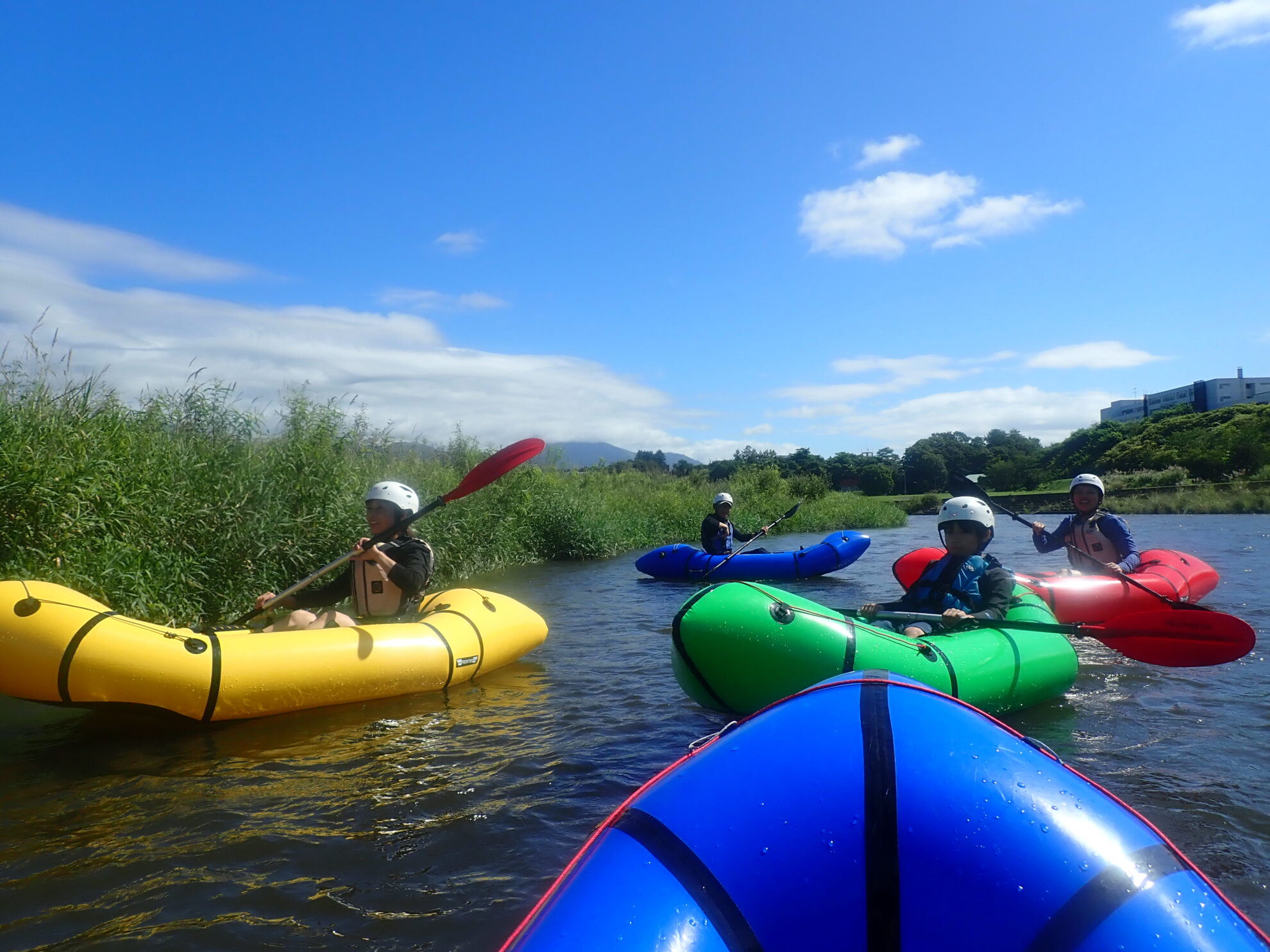
Unlike kayaking or SUP, packrafting is still a young discipline in Japan. Through this guide series covering operators across Hokkaido, one thing has become clear: every guide has built their own path — through Hokkaido Outdoor Guide certification, RAJ (Japan Rafting Association), JMGA (Japan Mountain Guide Association), or years of hands-on field experience on the rivers they know best. There’s no single road to becoming a credible guide.
Within that landscape, one organization maintains a certification track specifically for packraft guides.
That’s JSPA — the Japan Safe Paddling Association.
This is one certification system among several valid paths — not a requirement for being a good guide. Field experience and a track record on the water matter just as much, arguably more. But knowing this system exists is useful information for anyone starting out in packrafting or curious about what guiding involves, which is why we’re covering it here.
About JSPA
JSPA was founded in 1988 to promote safe paddle sports in Japan. Originally named the Japan Safe Canoeing Association (JSCA), it took its current name in March 2022, reflecting the growth of newer paddle sport categories including SUP, fishing kayaking, and packrafting.
More than 500 members with deep paddling and safety expertise, and over 50 certified schools running tours and clinics from Hokkaido to Okinawa. JSPA holds one of the longest-running and most structured instructor certification systems in Japanese paddle sports history.
Why JSPA Matters for Packrafters
JSPA divides its instructor/guide certifications across six boat categories:
- SUP
- Open canoe (Canadian canoe)
- Sea kayak
- Sit-on-top kayak (including packraft and ducky)
- River kayak
- Recreational kayak (including folding kayak)
Packrafting falls explicitly within the sit-on-top kayak category — meaning it’s a recognized part of the certification framework, not an afterthought. Several guides currently active in Hokkaido hold JSPA certifications.
Certification Levels
JSPA’s instructor/guide system is built in stages.
Basic Instructor (BI)
After certification, applying as a certified school (or joining an existing one) allows instructor activity in limited flatwater conditions within an approved field/area. The exam covers three academic subjects, paddling technique, instructional method, safety training, and field assessment.
Advanced Instructor
The level above Basic Instructor. Completion of the SRP (Safety & Rescue Program) is a prerequisite for this exam.
Sea Guide / River Guide
More specialized certifications recognized for guiding in conditions with limited escape options — open water sections, or fields involving moving water.
SRP — Safety & Rescue Program
A safety and rescue clinic offered by JSPA for paddlers at every level, from beginners to group leaders. Built from the real-world knowledge of working instructors and guides, completion of SRP is required before sitting the Advanced Instructor exam.
The program covers water safety across lake, river, and sea environments, delivered as a one-day clinic at certified schools nationwide.
Certification Is One Factor — Not the Only One
A guide certification isn’t the sole measure of trust.
JSPA’s system represents:
- Knowledge verified through written examination
- Technique verified through practical skills testing
- Instructional ability verified through teaching assessment
- Completion of safety and rescue training
These are cleared step by step before certification is granted. At the same time, years of standing in the field, deep familiarity with local rivers, and a reputation built through word of mouth are just as significant. For anyone considering packrafting for the first time, or booking a tour, knowing that systems like JSPA exist is one factor to weigh — alongside a guide’s experience, style, and the relationships they’ve built in their community.
Packrafting Is Still Early
Packrafting in Japan remains a developing discipline. Some in the industry describe it as perpetually “about to take off” without quite breaking through. Even so, the number of paddlers grows year by year.
Its accessibility is part of its appeal — but that same accessibility can obscure the real risks that rivers present. Knowing that certification systems like JSPA’s exist is one starting point for paddlers thinking seriously about their own safety.
JSPA Official Site
→ https://japan-safe-paddling.org/
For specific exam requirements, certification schedules, and a list of certified schools, please refer to the official site.
This article is an independent informational piece produced by Packraft Hokkaido. For the latest details on certification requirements, please refer to the official JSPA website.
コメント