
The day-trip kit is sorted. So what gets added when you sleep by the river?
This is the gear I actually carry on a two-night-or-less river trip in Hokkaido, written as the difference from a day kit rather than a list from scratch. Hokkaido conditions shape some of these choices — the water stays cold all year, and a few things here are specific to this island.
Start from the day kit
An overnight kit is the day kit plus a few categories. Boat, paddle, PFD, helmet, drywear, shoes, repair kit — none of that changes because you are staying out.
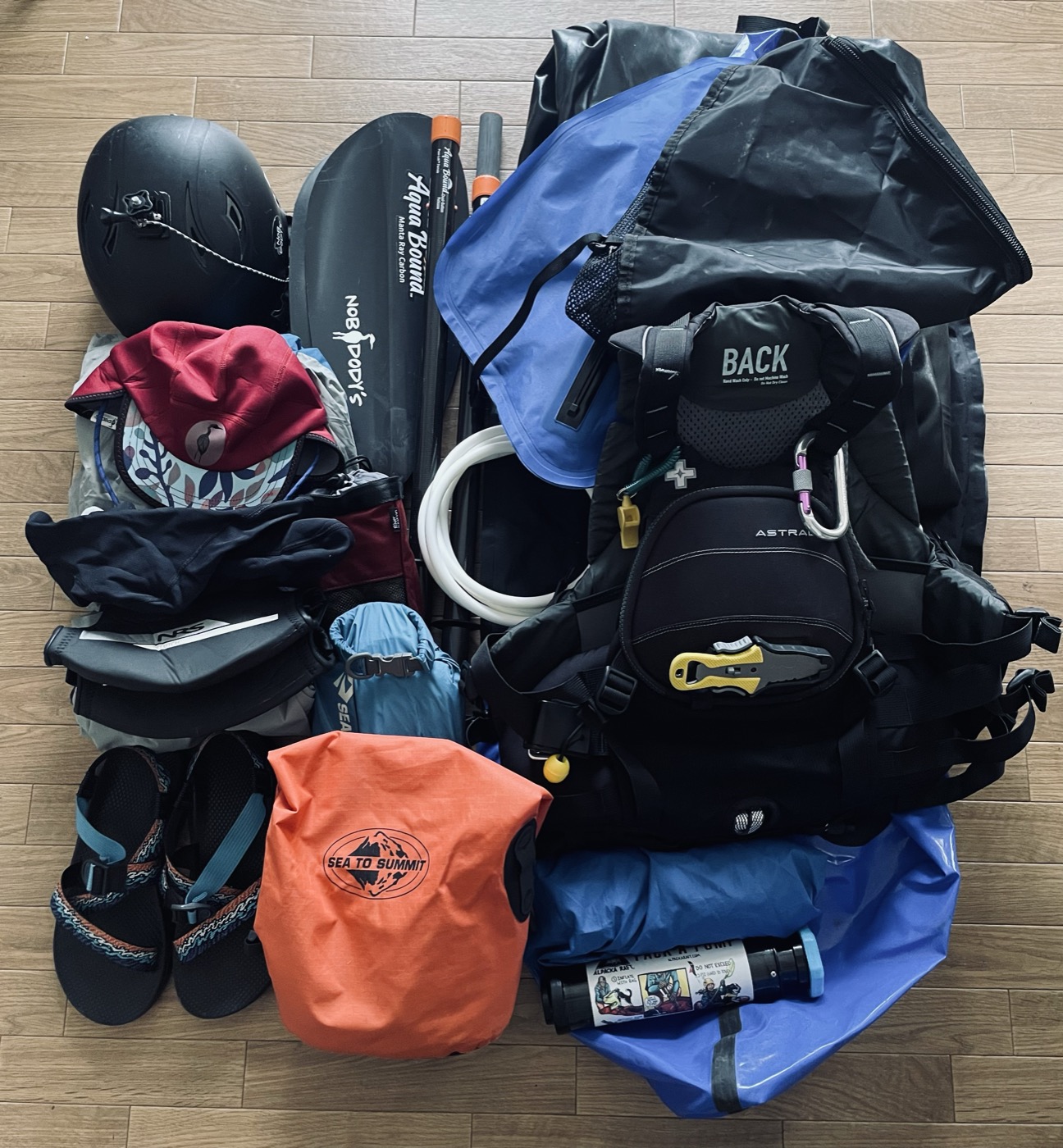
The full day-trip list is in Packraft River Gear List — 13 Essentials I Actually Use in Hokkaido. What follows is what gets added on top.
Five categories: sleeping, water and food, human waste, working after dark, and keeping all of it dry.
Sleeping
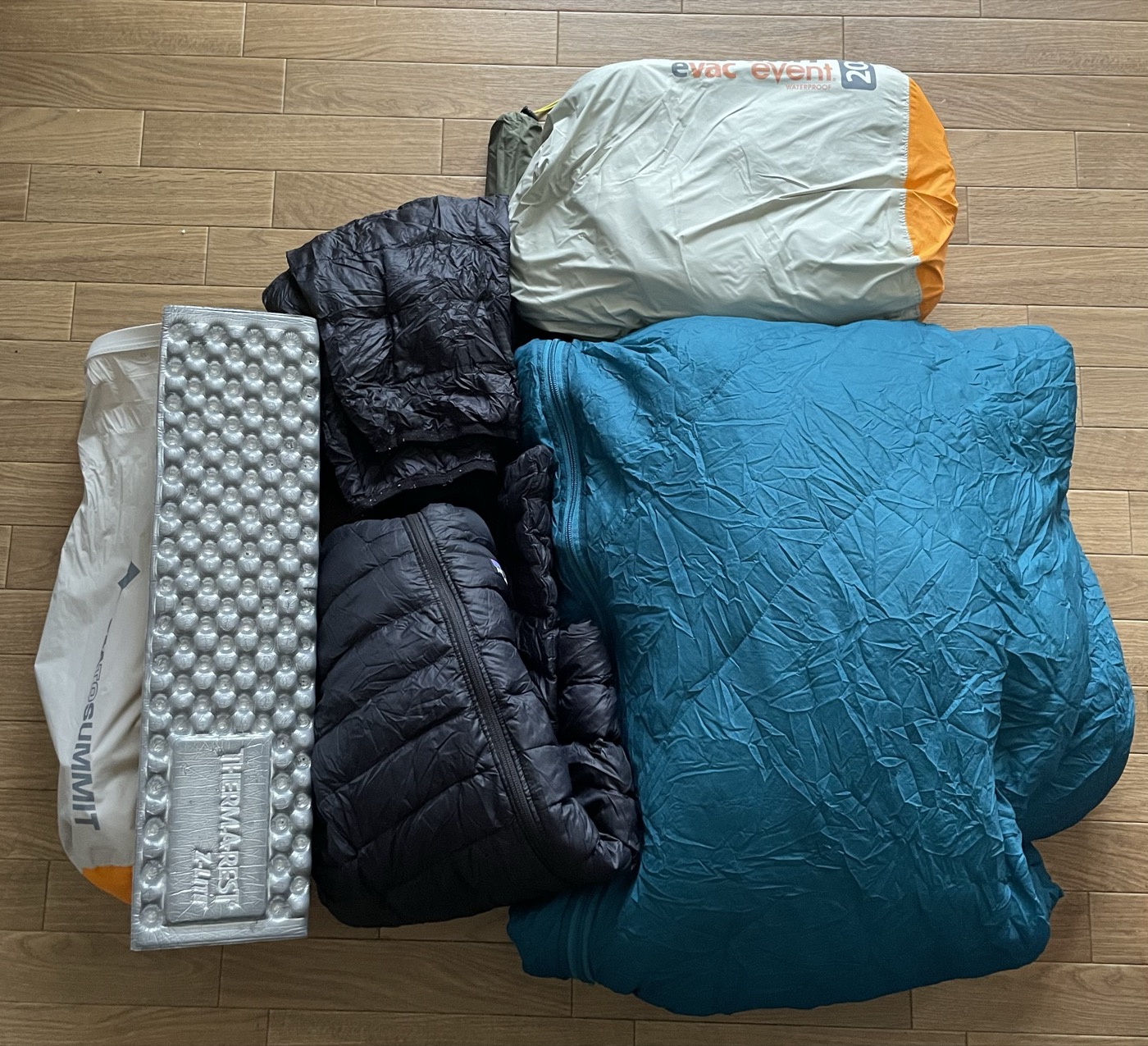
- A one- or two-person backpacking tent. Gravel bars are hard ground and stakes often will not hold. A freestanding design gives you far more choice about where to pitch
- Sleeping bag. It travels inside a dry bag. Wet down ends the trip, so the waterproofing is doubled up
- Closed-cell foam pad (Therm-a-Rest Z Lite). Not an inflatable — reasons below
- Down jacket and down pants. Strictly for camp. You come off the water cold and wet; these go on after you have changed
- A dry change of paddling clothes. Same dry bag as the sleeping bag. Spending the night in wet layers means losing heat all night
The pad choice is worth explaining, because it runs against normal ultralight thinking. Three reasons:
- Nothing on a gravel bar can puncture it. On a hiking trip an inflatable wins on weight and comfort. On a river you are around sharp rock and wood constantly
- If the boat seat fails, the pad becomes the seat. This is the big one. An inflatable seat that will not hold air ends a trip; a piece of foam cut to size lets you keep paddling
- It unrolls and it is ready. No inflating after a long day. Gear with less friction is the gear you actually keep using
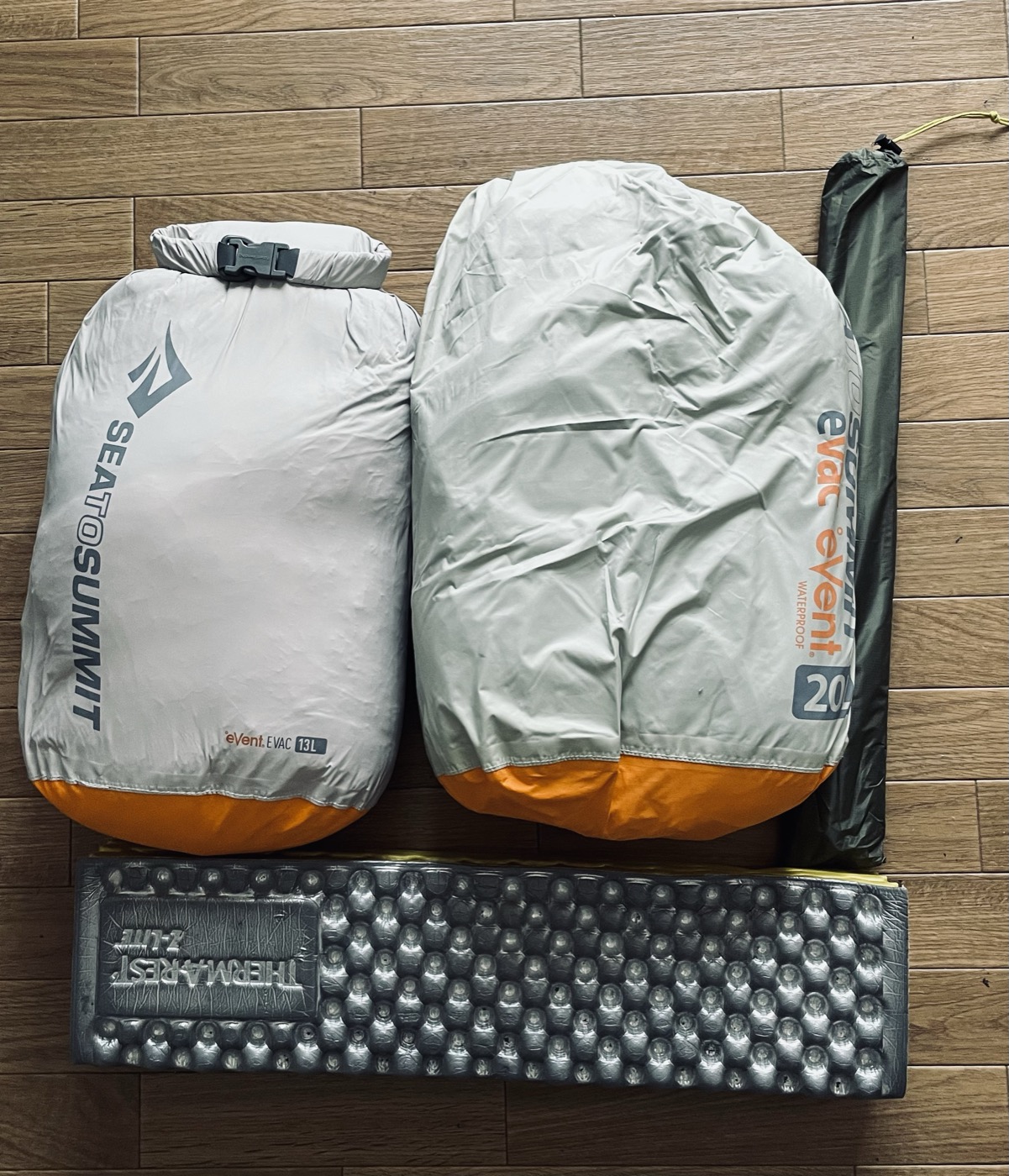
Packed, the whole sleep system is a 13L dry bag, a 20L dry bag, and the poles. Whether a piece of gear fits into that envelope is the real selection criterion, because it also has to fit in the boat.
Water and food
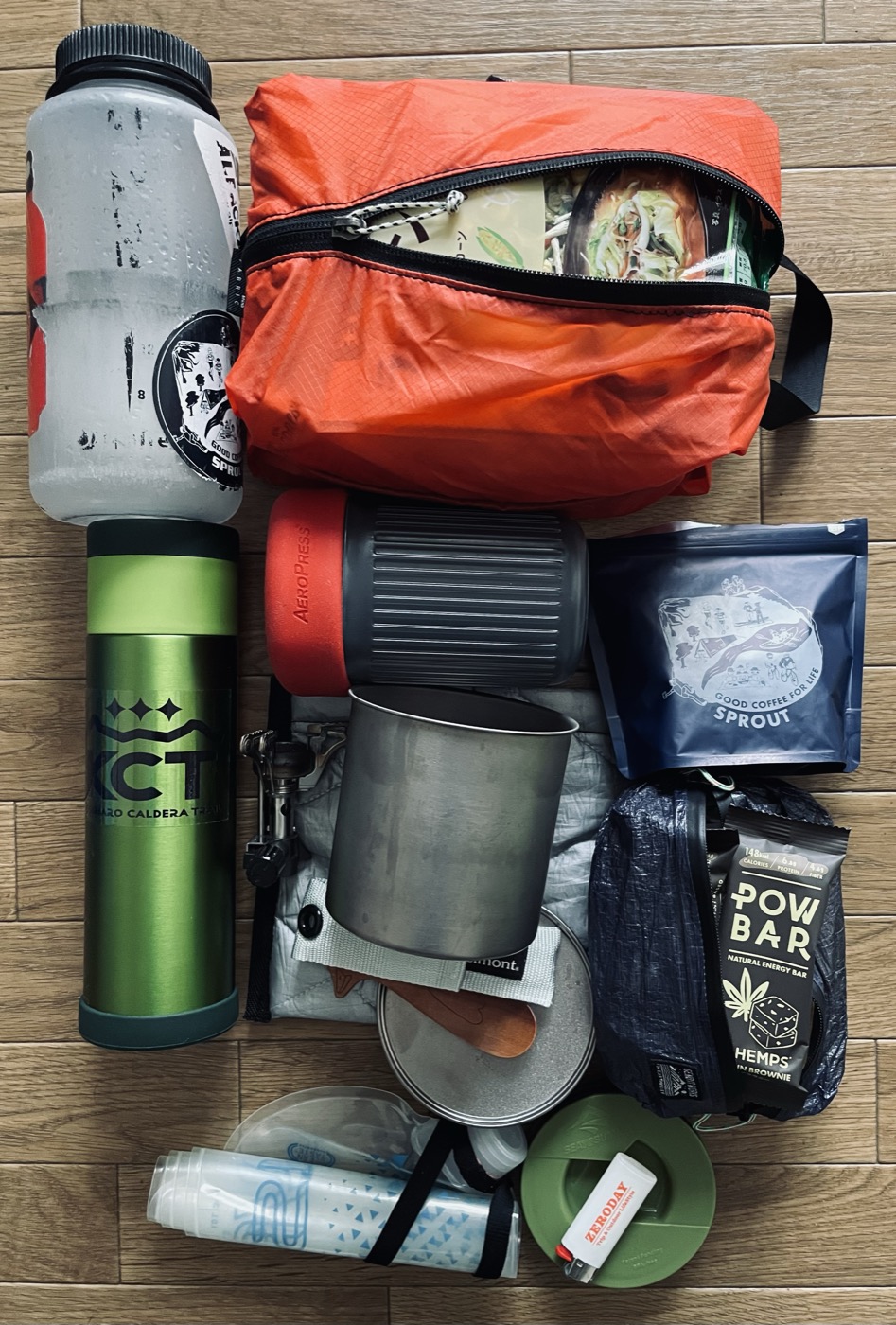
- Nalgene bottle. Carried water for the day
- Water filter. Do not drink untreated water in Hokkaido. Foxes here carry Echinococcus multilocularis, a tapeworm that can be transmitted through contaminated water. Boil it or filter it. For one night you can usually carry what you need; past that a filter stops being optional
- Stove, pot, titanium mug. If you can boil water you have enough. There is no real cooking on these trips
- Instant noodles and bars. Things you rehydrate, and packaging that does not become bulk
- Vacuum flask. Boil in the morning, and there is something hot waiting when you land
- AeroPress Go and coffee. Cuttable weight, and it stays in anyway
Human waste goes home with you
Settle this before you launch, not when you need it.
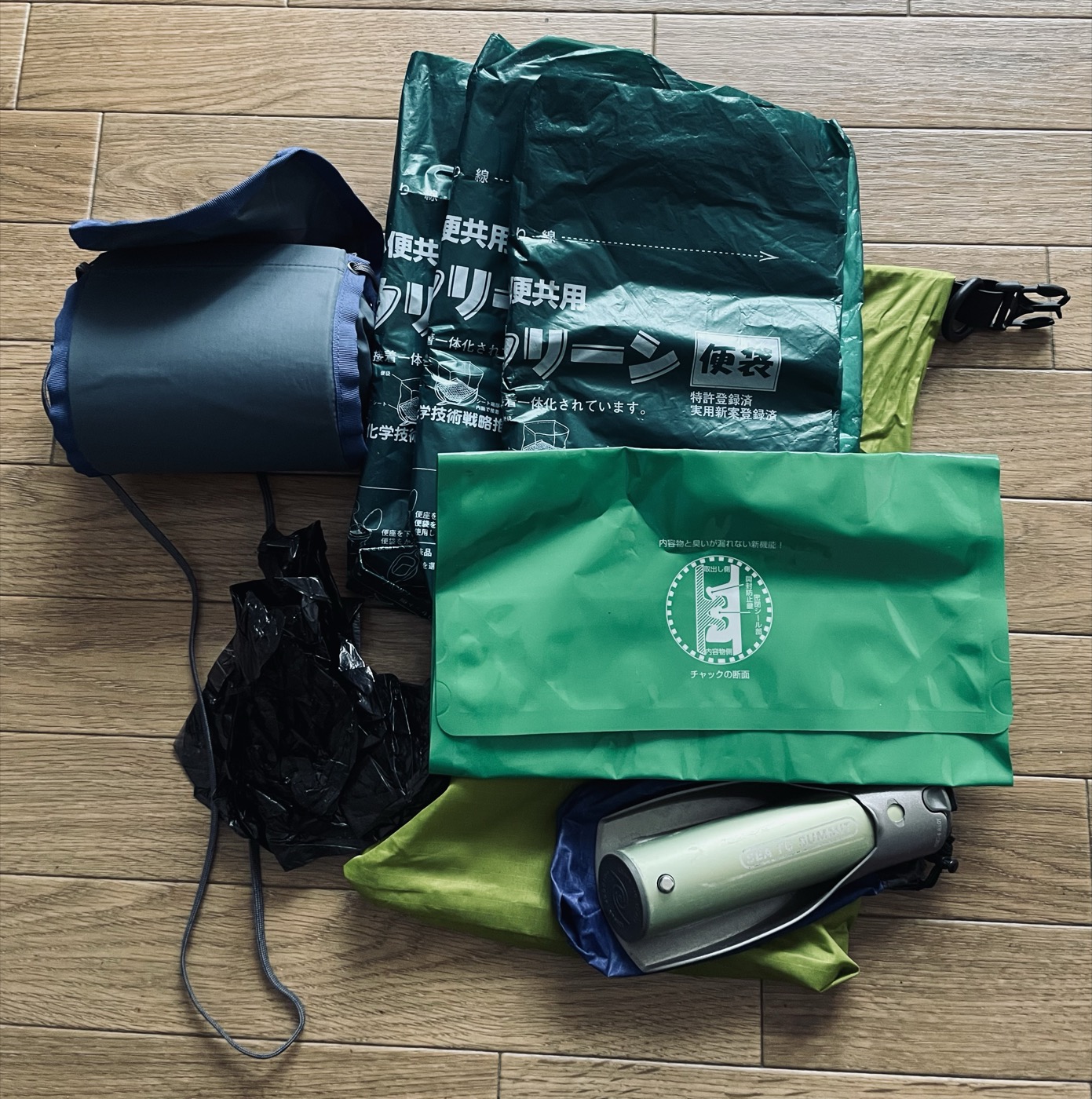
- Portable toilet bags with gelling agent. Slightly more than the number of nights
- Odour-proof sealed bags. For used ones. The seal matters more than you would guess
- Rubbish bags. One more layer outside that
- Trowel. Less for digging than for general handling
- Toilet paper case (Montbell). Hangs around your neck, which keeps both hands free
A gravel bar gives you nowhere to go. Burying is not an option on ground that floods, and what you bury comes back out at the next high water. Pack it out, plan for it, and you will not be improvising on the bank.
It is unglamorous gear. It is also the part that decides whether these rivers stay usable.
Safety, repair, and after dark
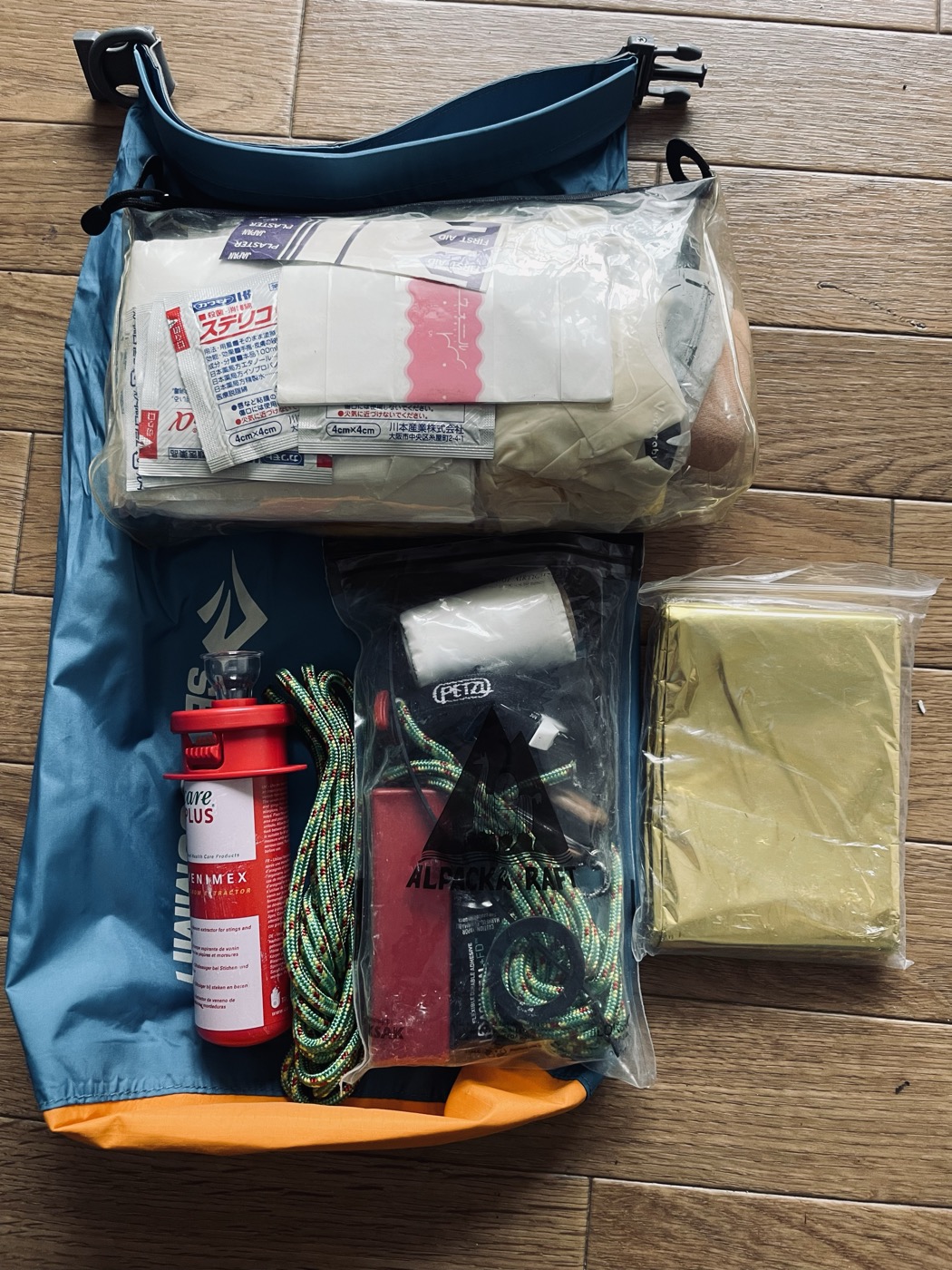
- First aid kit. Dressings, gauze, antiseptic. Something you have actually opened before
- Poison remover. For wasp and blackfly bites
- Repair kit. Same as the day kit, but the stakes change — out here a hole is the difference between paddling home and not. Detail in Packraft Punctures, Damage, and What to Put in Your Field Repair Kit
- Headlamp. New for overnights. Pitching and breaking camp both end up happening in the dark. This is camp equipment — I do not paddle at night
- Power bank. More important the longer the trip
- Emergency blanket. Hypothermia is the realistic risk here
- Cord. Drying line, shelter guy-out, lashing. Useful precisely because it has no assigned job
Navigation is a phone map most of the time. A paper map comes along when the route is long or the coverage is not there.
Keeping it dry
On an overnight, how you waterproof matters more than which individual items you chose.
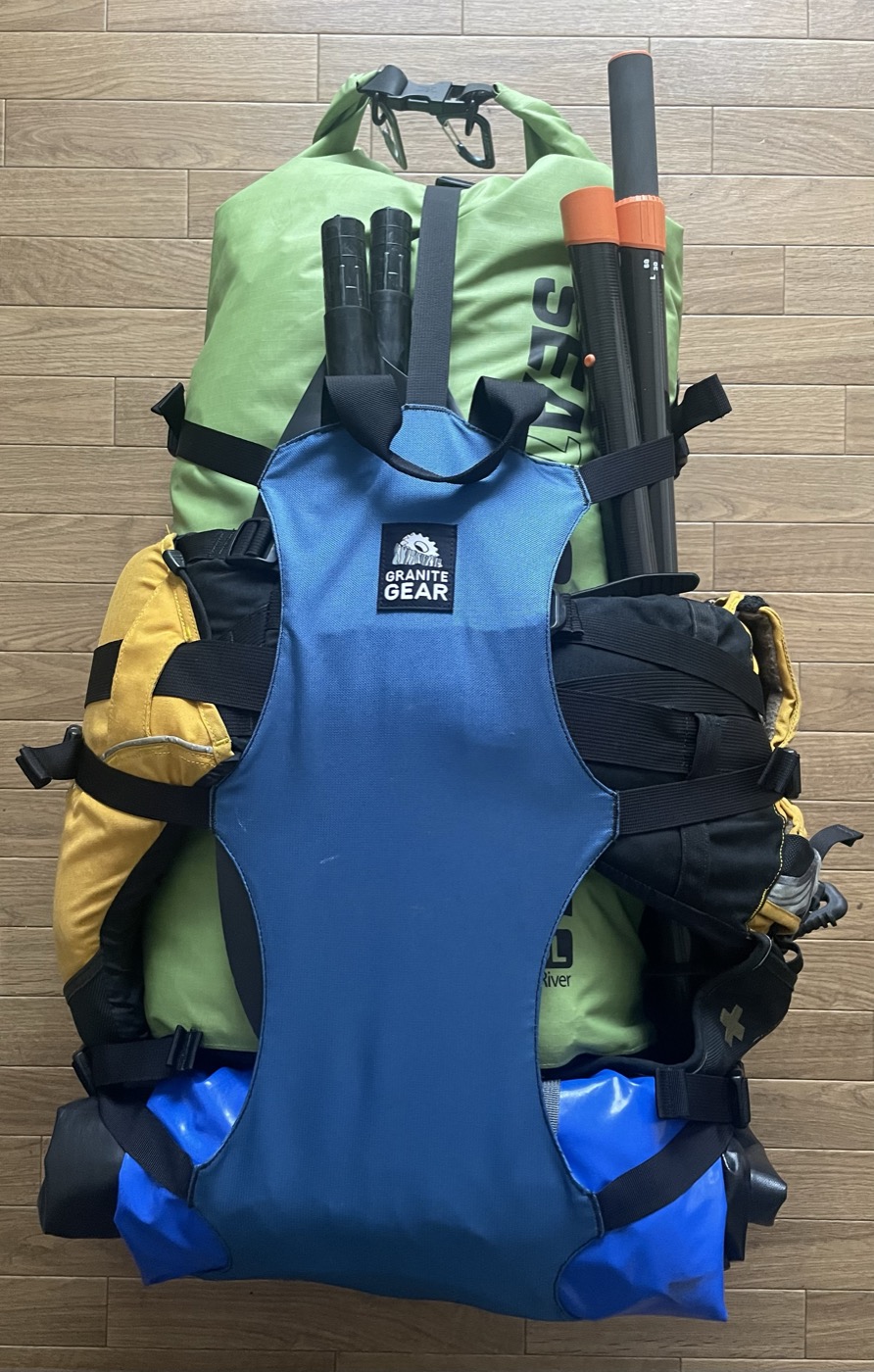
Sort by consequence rather than by category:
- Cannot get wet. Sleeping bag, down, dry clothes, headlamp, electronics. Dry bag, then stowed somewhere dry in the boat
- Can get wet. Tent body, pot, water gear. A soaking does not stop the trip
- Needs to be reachable. Food, water, first aid. PFD pockets or a deck bag
Several mid-size dry bags load better than one large one — they fill the odd spaces in a boat that is not a rectangle. Squeeze the air out and a long thin bag will go through a cargo fly into the tubes.
What changes on a longer trip
This list is built around one night out. Going longer does not restructure it.
- Food scales with the number of days. That is the honest part
- The filter stops being optional once carried water runs out
- Power bank capacity goes up
Build the one-night kit properly and the rest is addition.
The list
| Category | Items |
|---|---|
| Sleep | One- or two-person tent, sleeping bag, closed-cell pad, down jacket and pants, dry change of clothes |
| Water & food | Nalgene / water filter / stove / pot / titanium mug / vacuum flask / meals / bars |
| Human waste | Portable toilet bags / odour-proof bags / rubbish bags / trowel / toilet paper case |
| Safety & repair | First aid kit / poison remover / repair kit / emergency blanket / cord |
| Dark & power | Headlamp / power bank |
| Waterproofing | Dry bags — several mid-size (13L, 20L) rather than one large |
| Same as day kit | Boat / paddle / PFD / helmet / drywear / water shoes / throw bag / pump |
コメント