September 2024
A backpack. Sapporo Station. All the gear for an overnight river trip inside.
No car shuttle required. No remote trailhead. Just a train, a subway, and a packraft.
This might sound unthinkable by conventional outdoor standards. But that’s exactly what urban packrafting makes possible.
The Crew — Three Paddlers, Three Home Rivers
The three of us who gathered for this trip each have a distinct home river in Hokkaido.
Seishu (based in Minami-Furano) — a river guide and videographer whose home river is the Shisorapchi. He joined us on the Kushiro River trip in September 2023.
Kokunbu-san (Kushiro River area) — packraft guide and photographer at Kai Packrafting Hokkaido. He was also with us on the Shisorapchi River trip in June 2024.
And myself.
Two of Hokkaido’s most experienced river guides, both intimately familiar with wild backcountry rivers — and for this trip, we chose a river running straight through the heart of a city.
This was the final chapter of a series: each paddler’s home river, one at a time.
Why the Toyohira River?
After the Kushiro River and the Shisorapchi, the third river in the series was the Toyohira — the river that runs through Sapporo itself.
The Toyohira is the reason Sapporo exists. The city grew from this river outward. Yet most people who’ve lived here for decades have only ever seen it from above — from bridges, riverbanks, walking paths.
A packraft changes that.
The river becomes a road. A different way through the city. One that most people never take.
Day 1 — From Sapporo Station to the River
The Meeting Point (Sort Of)
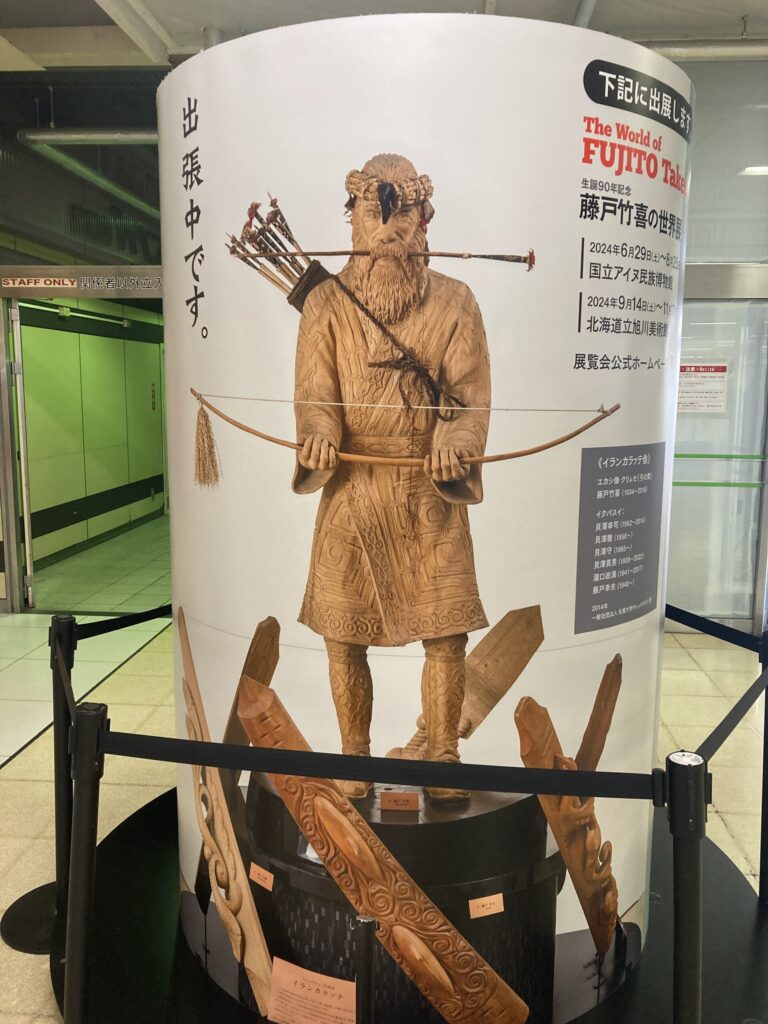
We planned to meet in front of the Uresipaosiri Hokkaido Iran Karapte statue inside Sapporo Station. The statue, however, was away on a “business trip.”
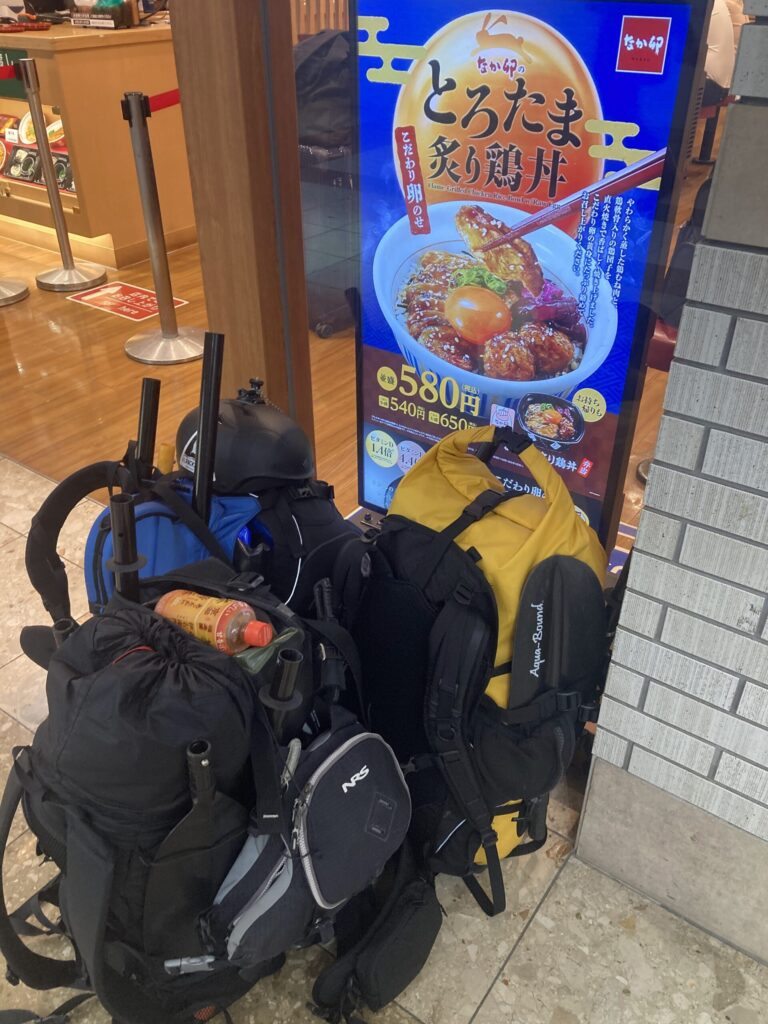
Packing styles were three for three — no two bags looked alike. We grabbed breakfast at a nearby restaurant, paddles and helmets stacked beside the table. Mismatched? Maybe. But perfectly fitting for an urban packrafting trip.
Taking Public Transit to the Headwaters
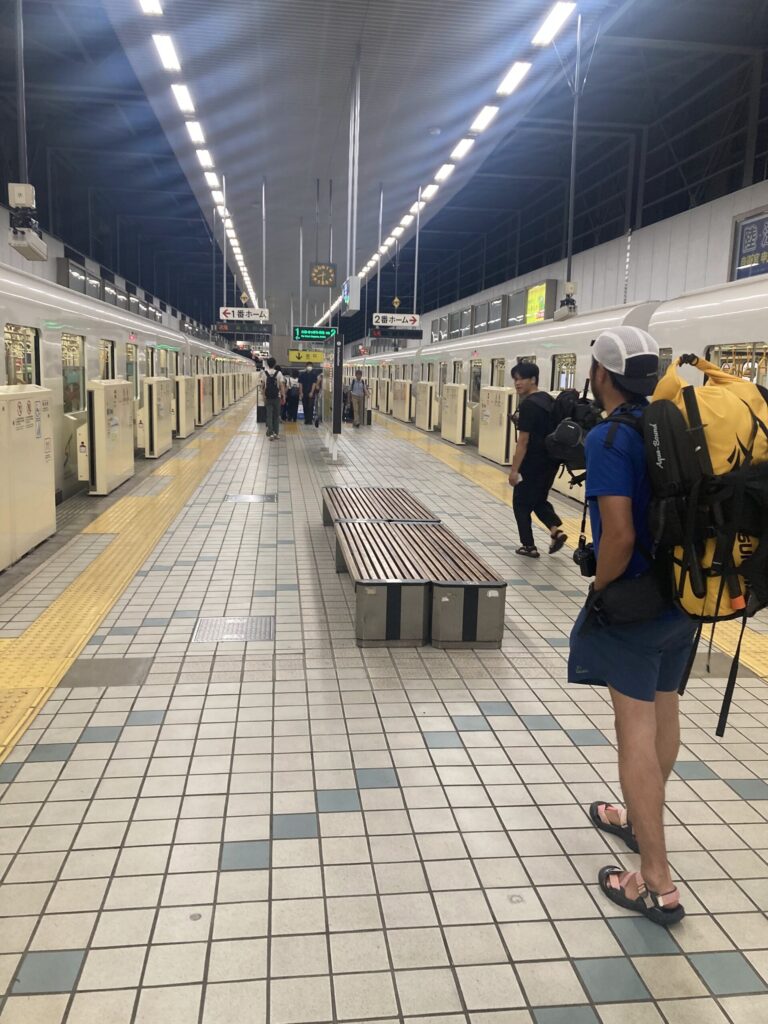
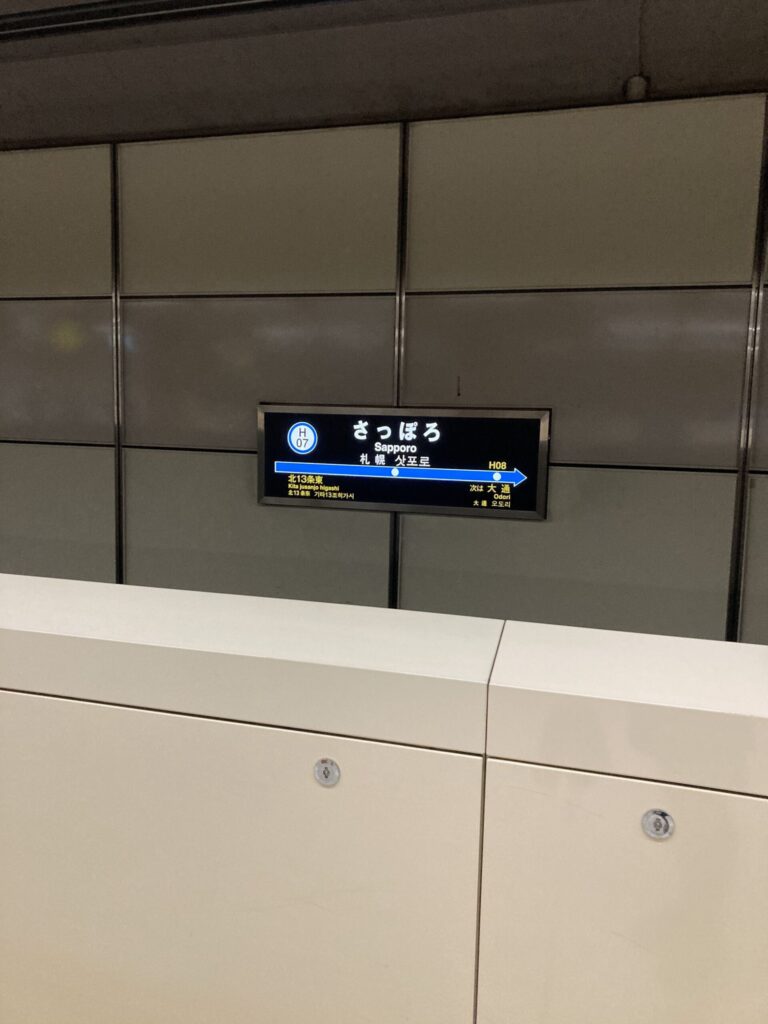
From Sapporo Station, we transferred to the subway and headed upstream. Finding the put-in point from the subway terminus meant walking against the flow of commuters — itself a kind of preview of what was to come.
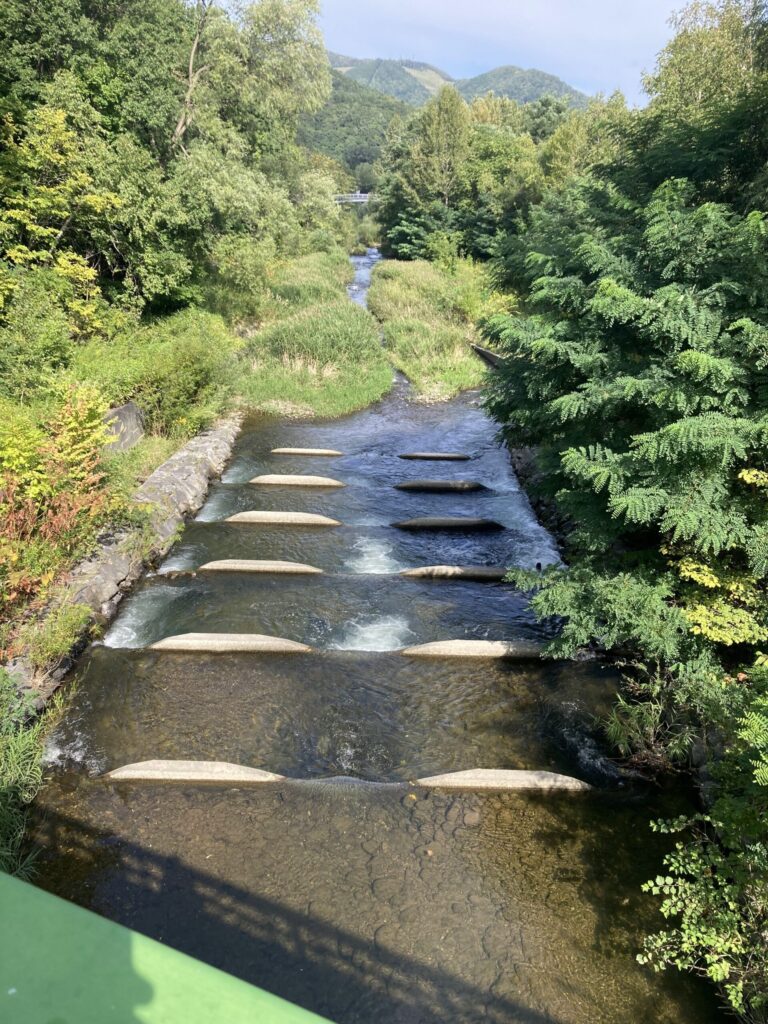
The tributary entry was too shallow, so we made our way to the confluence instead.
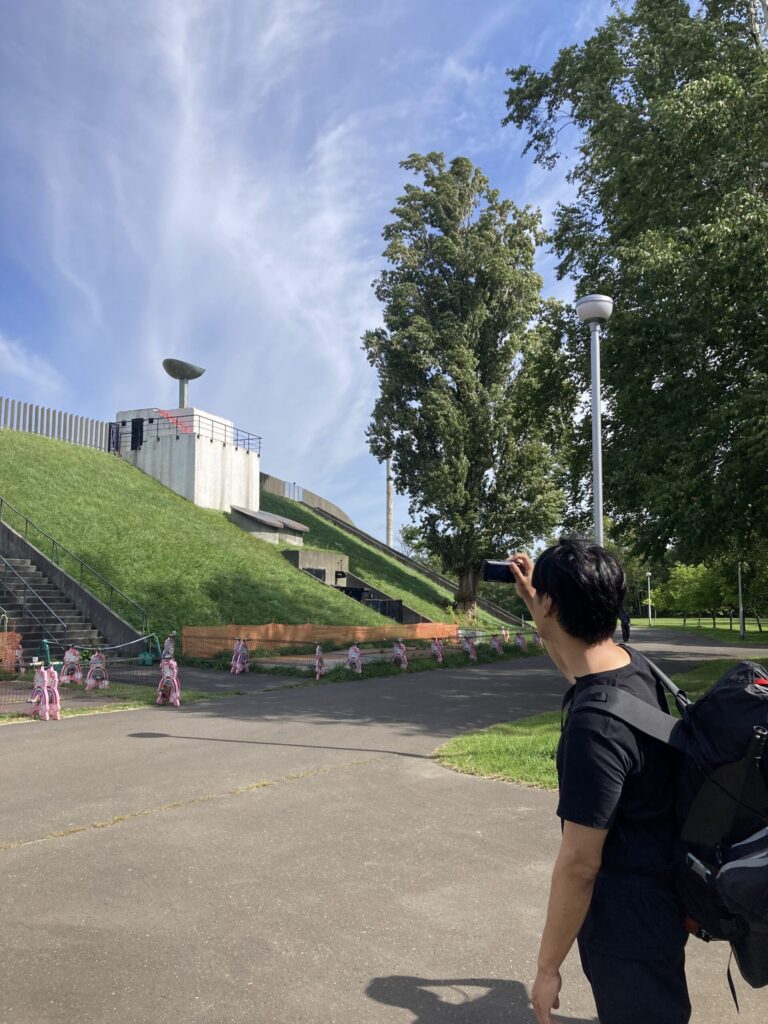
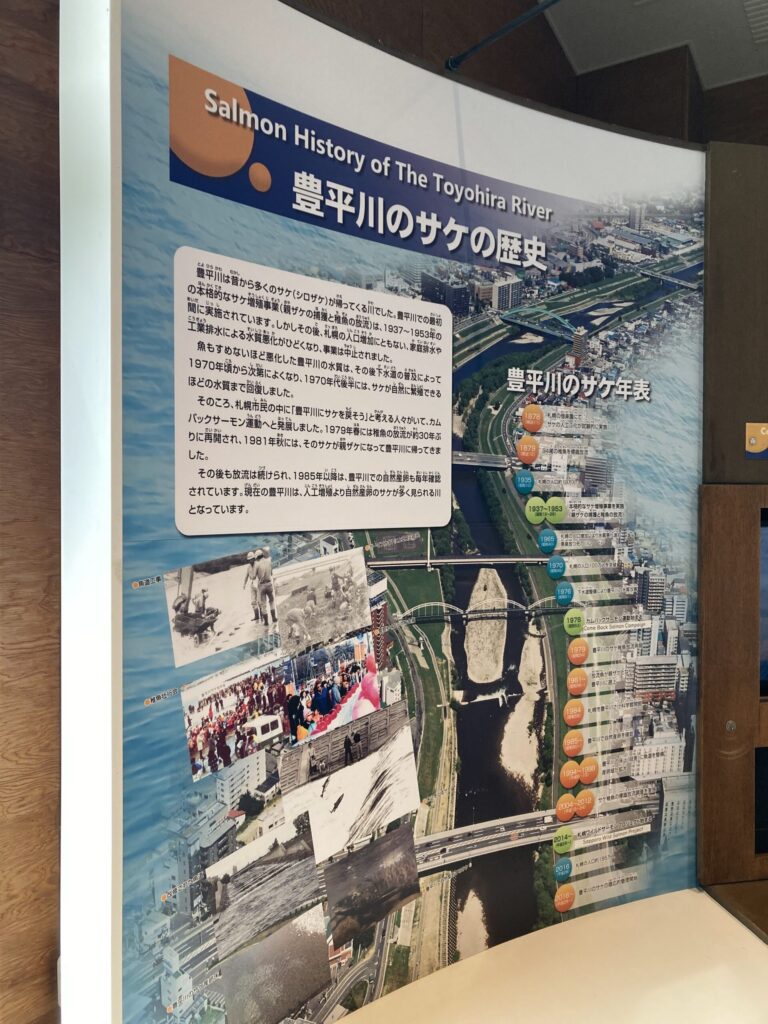
Before putting in, we stopped at the Salmon Science Museum inside the park that served as the main venue for the 1972 Sapporo Winter Olympics. Learning the history of the Toyohira River before getting on it — that’s the kind of detail only a guided trip brings.
Seeing the City from the Water
The moment we launched, something shifted.
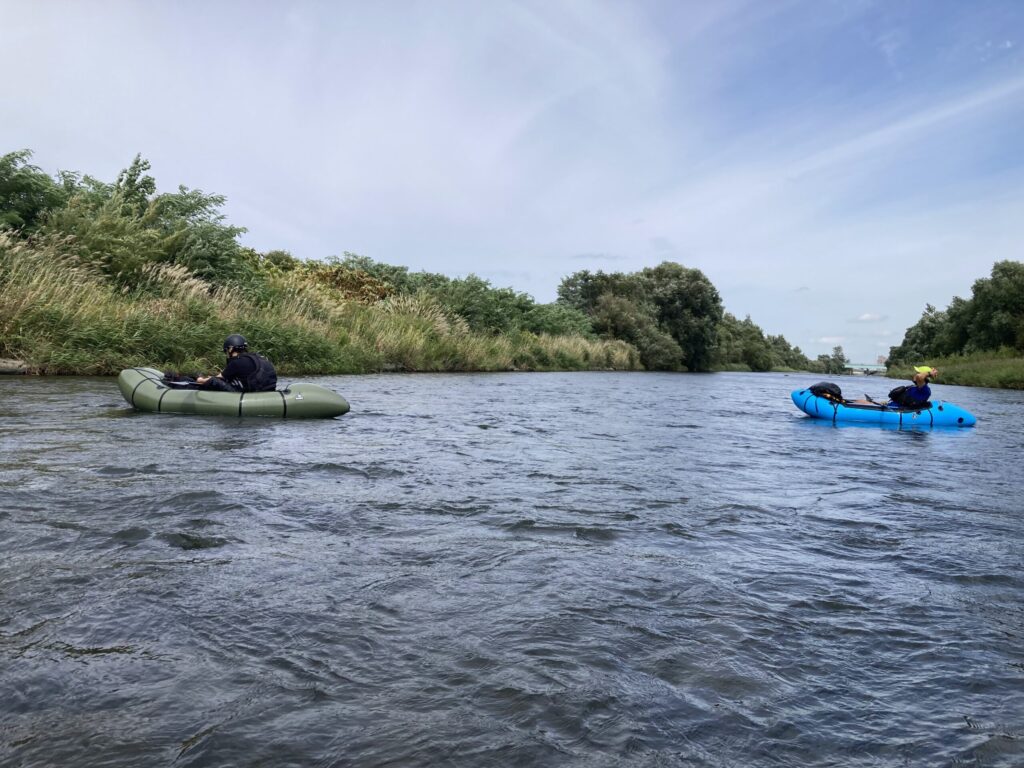
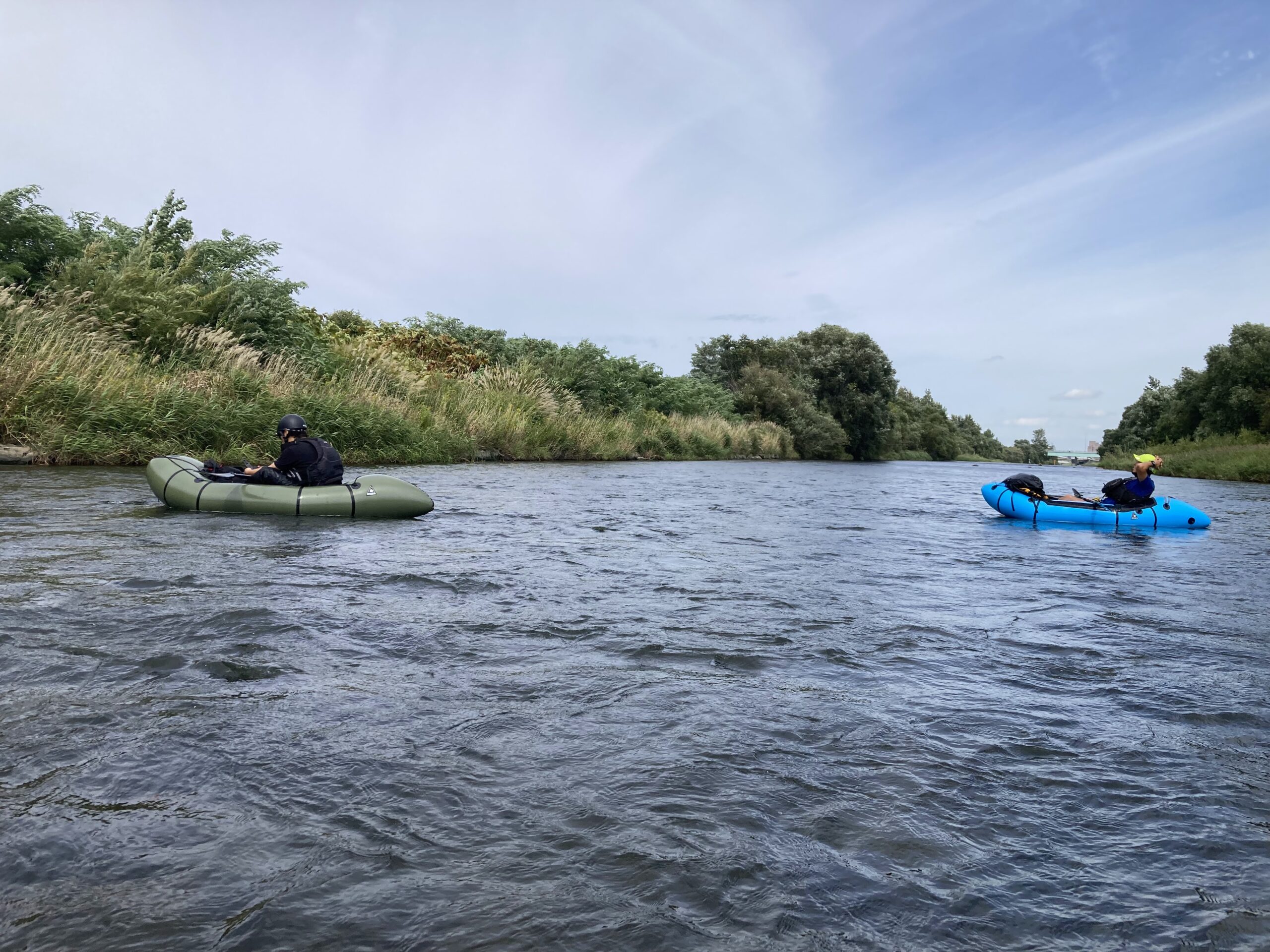
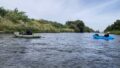
The cityscape looked completely different from the river’s surface. Buildings, bridges, familiar landmarks — all seen from an angle most people never experience. The same city, but from a perspective only available to those who choose to enter its natural channel.
As one of our crew put it: “It’s fresh to see the scenery I always look at from the street, now from the river. The only difference is whether you have a packraft or not.”
One note on safety: the Toyohira is an urban river, which means man-made structures. Tetrapods appear along stretches of the bank. At this water level, they were manageable — but in higher flows, they become serious hazards. Stay aware of your surroundings at all times.
Mooring the Packraft and Walking to Sumen Honten
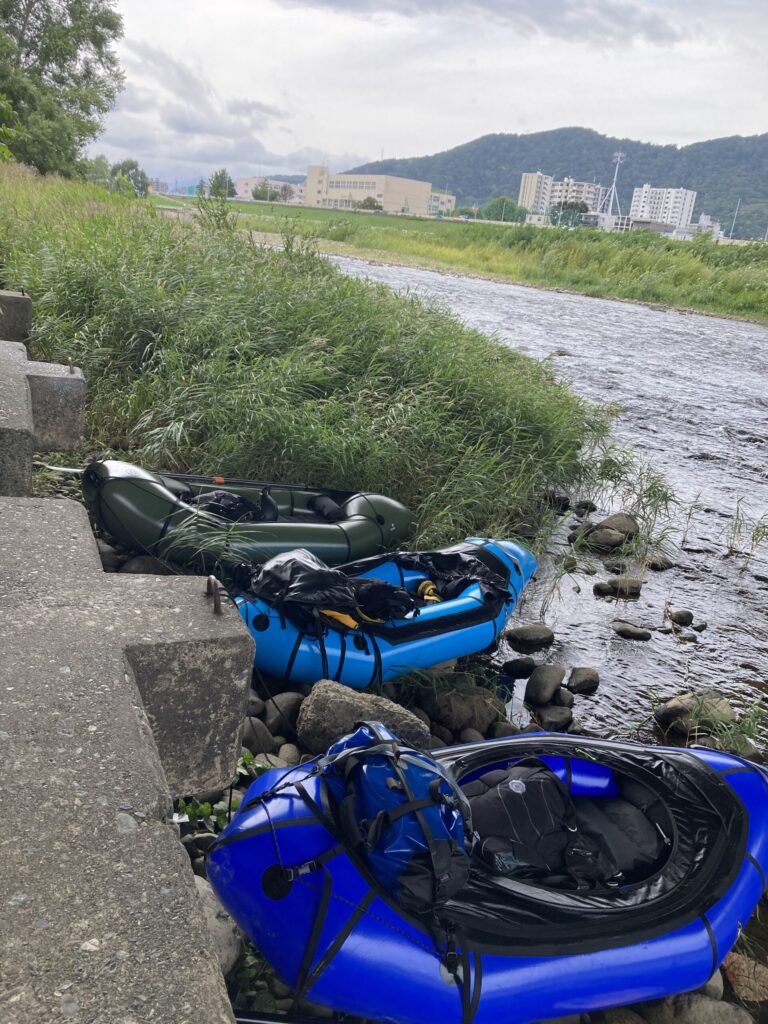
For lunch, we tied up the packrafts on the riverbank — parked, essentially — and walked to Sumire Honten, one of Sapporo’s most respected miso ramen shops.
Sumen is considered one of the defining references for Sapporo-style miso ramen, and the flagship location sits close enough to the Toyohira that walking there mid-river was entirely feasible. We left the boats on the bank, walked up in drysuits, and sat down to a bowl.
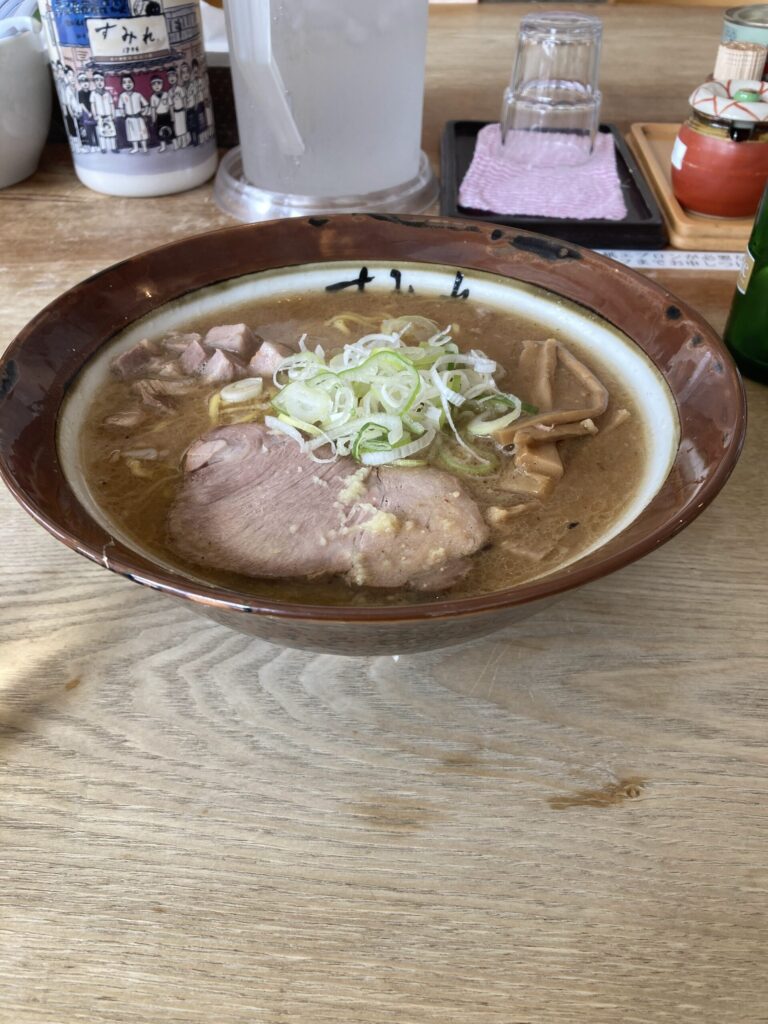
Arriving at a ramen shop by packraft is one of those experiences that only makes sense in the context of urban packrafting.
Bridges, One After Another
Bridge after bridge after bridge.
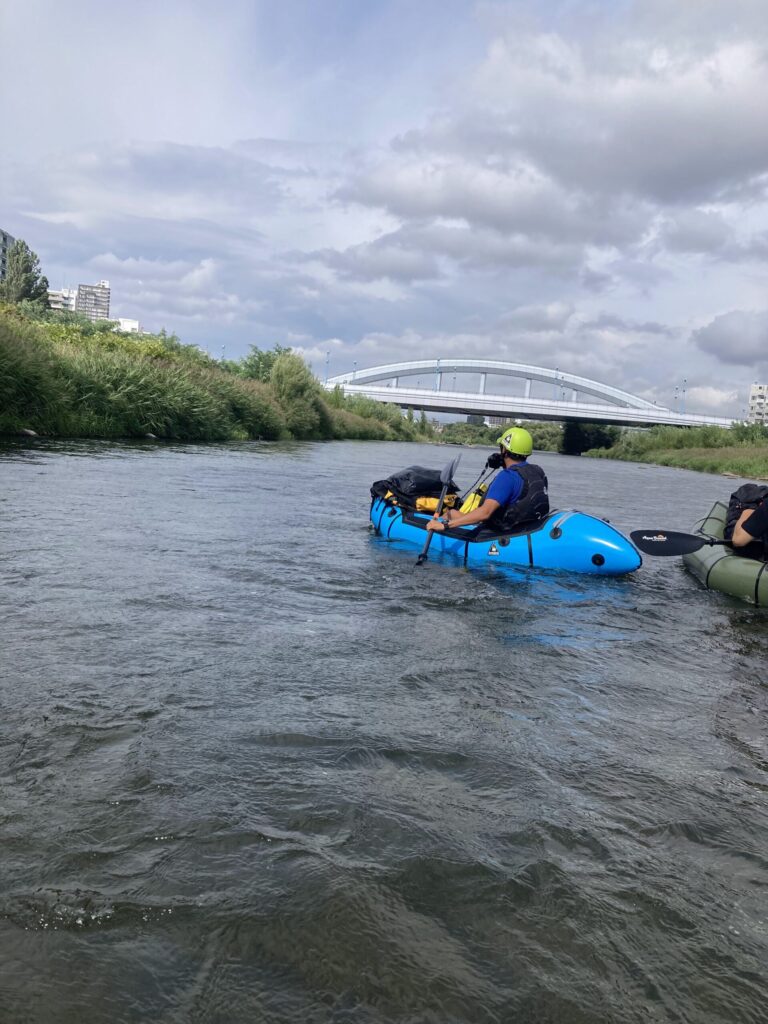
This might be the defining feature of urban packrafting. Every bridge we passed under was one that members of our crew had crossed dozens of times on foot or by car. Seen from underneath, from water level, each one held a different weight.
“Each bridge brings back memories of when I used to live nearby,” said one of our crew.
End of Day 1 — A Mountain Hut in the City
We finished the first day’s section and checked into Sappolodge — a city-style mountain hut in central Sapporo. No need to pitch a tent. No camp cooking required.
For dinner, we paddled the Toyohira toward Susukino. Approaching Sapporo’s entertainment district by river was genuinely strange and genuinely memorable.
⚠️ Safety Note — Low-Head Dams: Always Portage
On the Toyohira, and on urban rivers generally, low-head dams are a serious hazard.
The photo above shows one such structure. At low water, it may appear manageable. In this case, the water level was low and our experienced guides assessed the situation carefully before approaching. Even so, the backwash was significant.
At higher water levels: do not approach. Do not attempt to run it.
Low-head dams have caused fatalities among paddlers worldwide. The backwash created when water drops over the structure can trap a swimmer and make self-rescue extremely difficult — even for experienced paddlers. The danger is not proportional to how it looks.
Whenever you encounter a low-head dam or any similar structure: portage. Carry your boat around it on land. This is not a question of skill level. It is a question of judgment.
Before any river trip, research your route for artificial structures. When in doubt on the water, get out and walk.
Day 2 — Downstream into the City
It rained on the second morning.
Commuters moved quickly through the streets. We moved toward the river.
There are scenes you can only witness by entering the nature of a city rather than moving through it. Rain falling on the Toyohira while the city goes about its morning — that was one of them.
On the second day, drifting under one of the bridges, we heard it before we saw it — someone playing a brass instrument somewhere nearby.
The sound was coming from the riverbank or the bridge structure above. We floated toward it, and there was someone practicing, entirely absorbed in the music.
It’s the kind of encounter that only happens from the water. On a city street, you’d walk past without stopping. On a river, moving at the river’s pace, you drift directly into it.
Urban rivers carry more than current — they carry the sounds of the city in ways you don’t expect.
We pushed downstream, into the lower section of the river. The current slowed. The water color changed. The bridges grew wider, carrying more traffic. The city expanded around us.
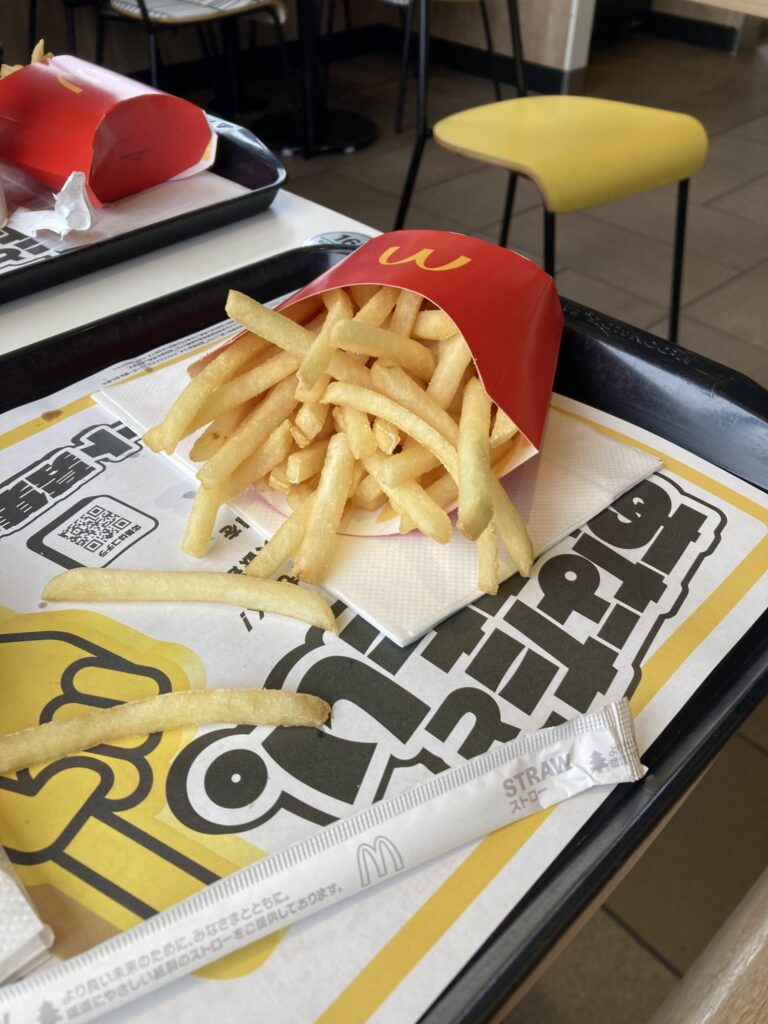
A McDonald’s stop mid-route was, unexpectedly, exactly what we needed.
The finish line was a large bridge in the lower city. From there, we used public transit to return to Sapporo Station — completing a full loop. The same station where we started, two days earlier, with everything packed into a backpack.
What Urban Packrafting Reveals
Decades of living in a city, and never once traveling the road that runs beneath it.
When you paddle downstream, you tend to think of rivers as something you look at from trails and roads. But this city was built from its river outward. The river was here first. Maybe it’s actually the center.
Touring Sapporo by packraft along the Toyohira — the river that gave the city its foundation — left a strong impression on all of us.
Urban packrafting isn’t a widely used term yet. But when we finished this trip, no other phrase came to mind.
Gear Used on This Trip
For a flat-to-light-water urban river like the Toyohira, a maneuverable, packable boat is essential. Public transit access means the packraft needs to fit in a backpack — weight and pack size matter from the very first step.
- Packraft: Alpacka Raft models → Packraft Hokkaido Web Shop
- PFD: Required at all times on the river
- Helmet: Important on urban rivers due to man-made obstacles
- Dry suit or wetsuit: September water temperatures in Hokkaido require thermal protection
- Throw bag: One per person, always
For a full breakdown of river packrafting gear, see: Essential Gear for Packraft River Paddling
This Trip in Context — The Home River Series
This was the final chapter of a three-part series, each trip centered on one paddler’s home river.
- Kushiro River — A 2-Day River Trip Report (Kokunbu-san’s home river)
- Shisorapchi River, Minami-Furano — BC Packrafting (Seishu’s home river)
- Toyohira River, Sapporo — Urban Packrafting (this article)
For Seishu’s account of the Shisorapchi trip from a guide’s perspective: The Trails Mag
コメント