“Which one should I get — the Forager or the Ranger?”
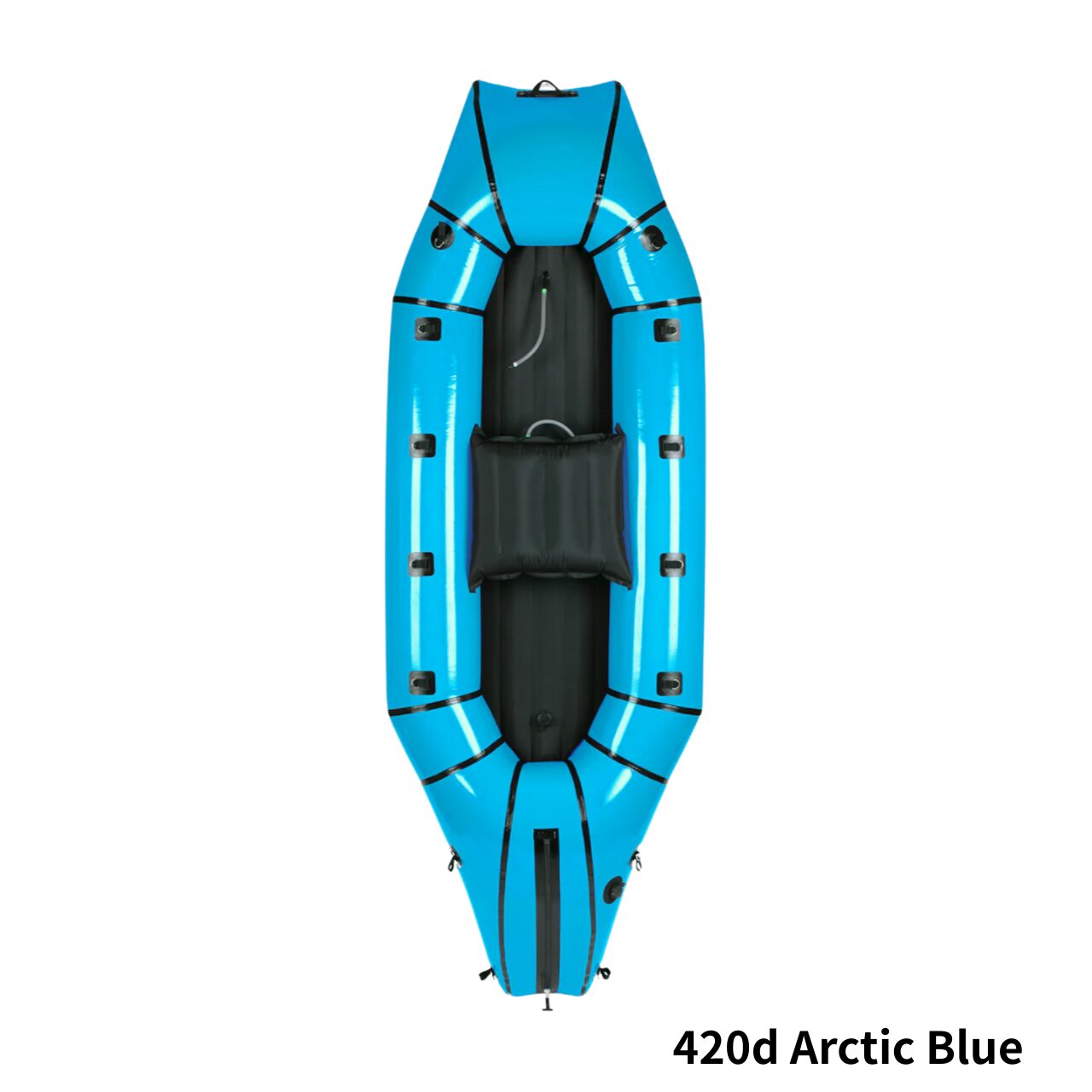
These two boats share the same design DNA. One is the scaled-up version of the other. But understanding what that size difference actually means in practice is what determines which one is right for you.
This article compares the Forager and Ranger across seven dimensions to help you make a clear decision.
How the Two Boats Relate
The Forager and Ranger are the same design at two different scales.
| Forager | Ranger | |
|---|---|---|
| Length | 315cm | Shorter |
| Width | 109cm | Narrower |
| Weight | Approx. 6.3kg (kit weight) | Lighter |
| Deck | Self-bailer only | Self-bailer only |
| Fabric | 420d nylon | 420d nylon |
| Passengers | 2 adults, or 1 adult + multiple kids/pets | 1 adult + 1 dog or child |
The Forager carries more, holds more people, and covers more ground. The Ranger goes further — lighter, more maneuverable, better optimized for solo operation.
Size and Weight
The Forager’s 315cm length and 109cm width give it a genuinely large hull. The Ranger is a size smaller — more compact in the pack, lighter on the back.
Where the Forager’s size works in its favor: Trips where load capacity matters more than carry weight. Getting everything and everyone into a single boat.
Where the Ranger’s lighter weight works in its favor: Long hiking approaches where you’re carrying the packraft on your back for extended periods. Every gram compounds over distance.
Passenger and Load Capacity
Forager configurations
- 2 adults (fore and aft in canoe style)
- 1 adult at the stern + multiple children + pets
- Solo paddler + large cargo load
Ranger configurations
- 1 adult + 1 dog
- 1 adult + 1 child
- Solo paddler with mid-size game animal
Load capacity comparison
| Forager | Ranger | |
|---|---|---|
| Single paddler maximum | Approx. 136kg | Approx. 136kg |
| Combined weight with additional persons/pets | Approx. 227kg | Approx. 181kg |
| Cargo Fly — optimum | Approx. 90kg + 2 paddlers | Approx. 63.5kg |
| Cargo Fly — maximum | Approx. 200kg | Approx. 136kg |
| Hunting (hunter + personal gear + game) | Approx. 45kg + 181kg animal | Approx. 45kg + 113kg animal |
| Flatwater theoretical maximum | Approx. 454kg | Approx. 340kg |
The single-paddler weight limit is the same between the two boats. The Forager pulls ahead in multi-person capacity, cargo load, and maximum game weight — most notably in hunting, where the Forager can carry significantly heavier animals.
Paddling Style
Forager: Supports both kayak style (double-blade paddle from the stern) and canoe style (two paddlers with single-blade paddles). The R2 configuration opens up serious whitewater with two experienced paddlers.
Note: The Forager’s 109cm width means a longer paddle — around 240cm — is recommended for double-blade use.
Ranger: Optimized for solo kayak-style paddling. The hull dimensions and seat placement are tuned for one paddler operating efficiently and comfortably alone.
Use Case Comparison
| Use case | Forager | Ranger |
|---|---|---|
| Family (2 adults + kids + dog) | ◎ | △ (1 child max) |
| Solo day trip | ○ (oversized for solo) | ◎ |
| Two-person whitewater | ◎ | △ |
| Flatwater touring | ○ | ◎ |
| Long backcountry approach on foot | △ (heavier) | ◎ |
| Large game hunting (moose, etc.) | ◎ (only option) | △ |
| Mid-size game hunting (deer, elk, etc.) | ◎ | ◎ |
| Fly-in remote trips | ○ (split carry between two) | ◎ (one person carries it) |
| Drift fishing | ◎ | ○ |
Hunting — Where the Difference Is Most Critical
The Forager and Ranger diverge most clearly in hunting applications.
Moose
Forager only. The Forager is the only packraft in the AlpackaRaft lineup capable of transporting a whole moose in a single load. If moose hunting is on the plan, the choice is made.
Elk, caribou, deer, bighorn sheep
Both boats handle mid-to-large game, but the Forager carries it with more margin. The Ranger is designed to carry a mid-to-large game animal along with full personal gear — a genuine capability, but a tighter fit than the Forager.
The deciding factor is approach distance.
Long, steep approaches where you’re packing in solo → Ranger (lighter is everything)
Fly-in or boat-access hunts where load capacity is the priority → Forager (capacity is everything)
Hokkaido context
For Ezo deer and brown bear in Hokkaido, the decision depends on terrain and game size. If the approach involves heavy bush or steep terrain, the Ranger’s packability is the advantage. If river or lake access is available and you’re targeting large game, the Forager’s capacity justifies the weight.
Decision Framework
Do you need space for two adults? → Yes: Forager → No: continue
Do you need to transport moose-size game in a single load? → Yes: Forager (only option) → No: continue
Are long hiking approaches a regular part of your trips? → Yes: Ranger (weight matters) → No: continue
Do you need to carry multiple children, multiple pets, or very large loads? → Yes: Forager → No: Ranger (better optimized for solo paddling comfort)
Summary
The Forager carries more. The Ranger goes further.
Neither is better — they’re optimized for different things.
If you need two-person capacity, moose-scale hauling, two-person whitewater, or maximum load space → Forager
If you paddle solo most of the time, prioritize packability, hunt mid-size game, or cover long approaches on foot → Ranger
コメント