
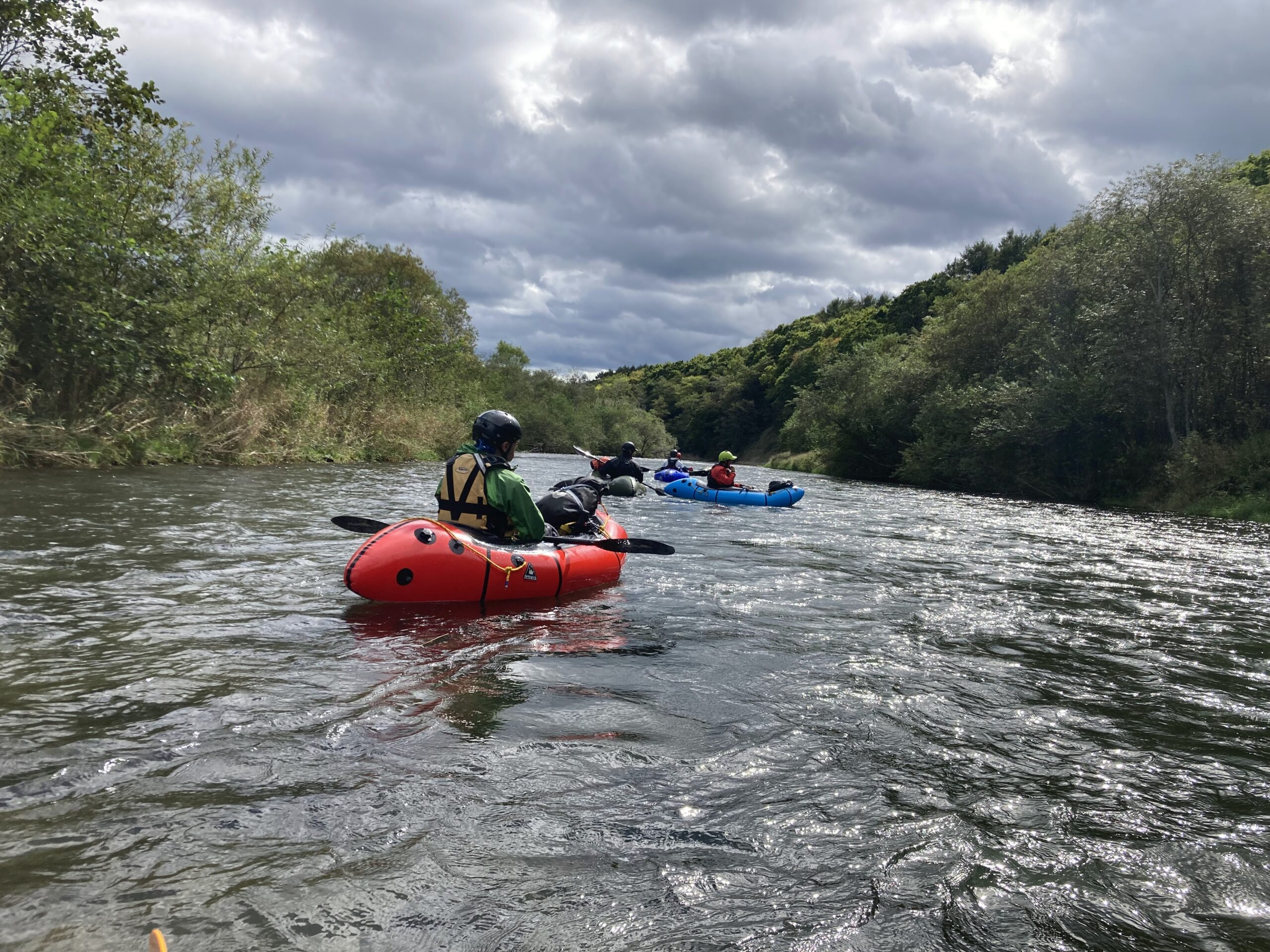
What follows here isn’t about guiding or gear. It’s a place to note the origins of place names and old river records, whenever something catches the eye.
The Kushiro River rises at Lake Kussharo, cuts through the Kushiro Wetlands, and empties into the Pacific. The name is thought to come from the Ainu kusuri, meaning medicine or hot spring — one theory ties it to Lake Kussharo’s old name, Kusuri-to, hot spring lake. Another points to the many hot springs upstream, with the river collecting their runoff. A third reading is kus-pet, a river you can pass through, referring to routes along the Kushiro that once connected to Nishibetsu, Nemuro, Shari, Koshimizu, and Bihoro.
The Town a Prison Built
The town of Shibecha, along the river, traces its founding to the Kushiro Prison Farm, opened in 1885 — the third such facility in Hokkaido, after Sapporo’s Kabato and Sorachi’s Ichikishiri prisons. Inmates worked sulfur mines, cut roads, and built homes for the tondenhei settler-soldiers. The road between Shibecha and Akkeshi dates to this period. The prison moved to Abashiri in 1901, closing a 16-year chapter.
Into the Wetlands, Out to the Pacific
Past Shibecha, the Kushiro enters its wetlands and winds its way to the Pacific in long, looping bends. A prison’s history upstream, a wetland’s expanse downstream — two entirely different timescales, layered into one river.
The Kushiro is a river we’ve covered here before, run source to sea over five nights and six days.


コメント