
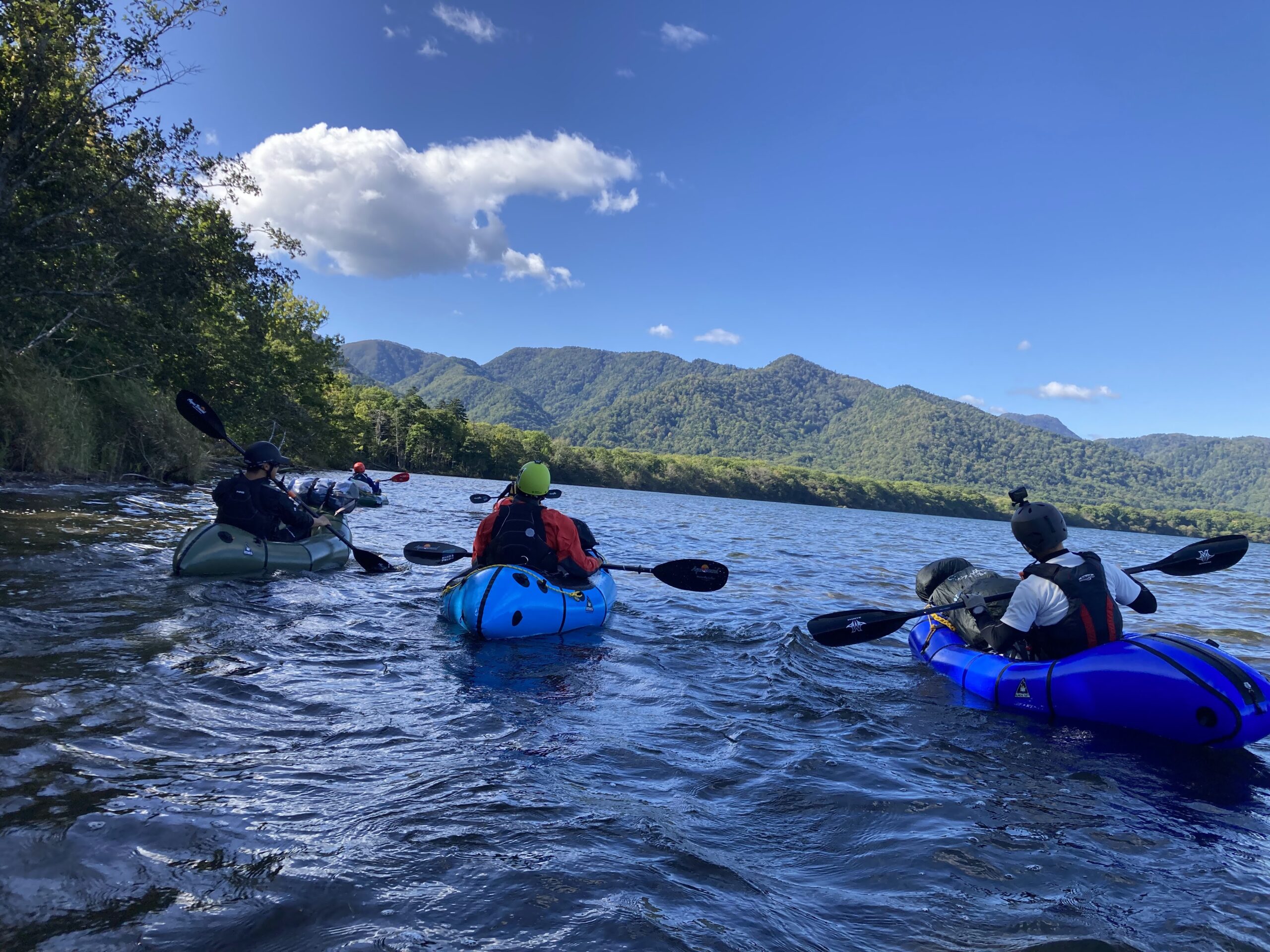
What follows here isn’t about guiding or gear. It’s a place to note the origins of place names and old river records, whenever something catches the eye.
Lake Kussharo is Japan’s largest caldera lake. Its name comes from the Ainu kutchara, meaning throat or mouth, extended to mean the mouth where a marsh’s water flows out. Old Edo-period maps also record it as Kusuri-to, hot spring lake. The name Kussharo itself is thought to come from Kutcharo, a kotan (Ainu settlement) once located near the river’s source.
The Kotan Matsuura Takeshiro Saw
The Kussharo-shore kotan first appears in written record in 1859, in the Kusuri Nisshi, the journal of Matsuura Takeshiro, sent by the Edo shogunate to survey Hokkaido. At the time, the kotan held seven houses. He wrote that the sight of homes lined up with the lake at their backs was beautiful beyond words.
A Lake With No Settled Name
Neighboring Lake Mashu stands in contrast — its etymology was never settled. The Ainu didn’t call it Mashu at all, but Kintan Kamuy To, the mountain god’s lake. Multiple theories exist for the Japanese name: mashi-un-to, gull marsh, and ma-shu, island’s old woman, among others. One lake’s name can be traced. The other’s can’t. Two lakes side by side, carrying their names in opposite ways.
Lake Kussharo has come up here before too, as the crossing point before a through-paddle down the Kushiro River.
コメント