
What follows here isn’t about guiding or gear. It’s a place to note the origins of place names and old river records, whenever something catches the eye.
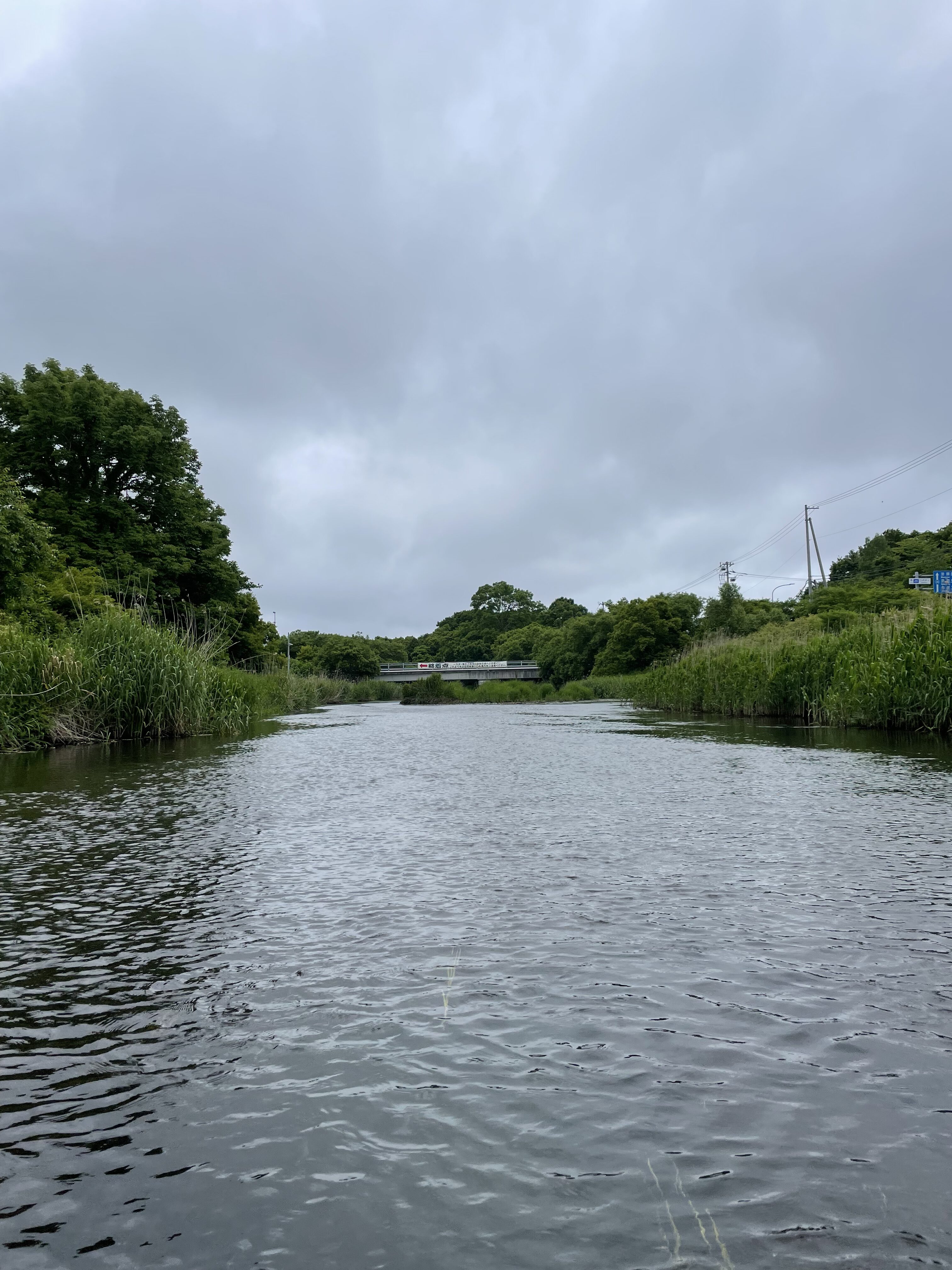
The Bibi River is a short one, running from the Yufutsu plain into Lake Utonai. Its name has more than one theory behind it, but the strongest is penke-pet-pet — “upper river, river” in Ainu. A tributary, the Misawa River, was once called Penke-Bibi, which suggests “Bibi” itself is a shortened form of pet-pet, “river-river.”
An Inland Route Through the Water
The name Yufutsu is similarly unsettled, though it’s often read as yu-put, “mouth of the hot spring.” An inland route once connected Yufutsu to the Sea of Japan side of Hokkaido. It ran by boat up the Yufutsu River, through Lake Utonai, the Bibi River, and the Misawa River, then overland into Shikotsu — today’s Chitose — before continuing by boat down the Chitose River to the Ishikari River. The full crossing took roughly three nights and four days.
Dugout Canoes, Recovered
Along the old right bank of the Yufutsu River in Tomakomai’s Numanohata district, and again during surveys ahead of New Chitose Airport’s construction, excavations turned up Ainu dugout canoes, plank boats, and paddles carved with swordfish motifs. They’re physical evidence that this stretch, the Bibi River included, was once a working trade route for dugout canoes.
The Bibi is a river that’s actually been run, by packraft and by bike both.
More field notes are listed in the Site Map.
コメント